
Your dog circles before lying down. Your cat stares at an invisible point on the wall. These behaviors, often deemed anecdotal, carry specific information. Animal communication refers to the set of signals (postures, vocalizations, scents, gazes) through which an animal expresses an internal state. Understanding these signals concretely changes the relationship between a human and their companion.
Body signals of dogs and cats: what posture reveals
You may have noticed that a dog yawning in the waiting room at the vet’s does not actually fall asleep? This yawn is a calming signal. It communicates moderate stress to its surroundings, including humans.
In cats, slow blinking acts as a marker of trust. When a feline looks at you and gently closes its eyelids, it signals the absence of threat. Reproducing this blink can change its behavior towards you in just a few days.
Every animal posture carries a readable message if you know where to look. A cat’s high and relaxed tail indicates serenity. Tucked under the belly in a dog, it signals fear. These indicators require no technological tools, just regular observation.
To explore the different approaches to this discipline, from behaviorism to intuitive listening, the entire Syntonie Animale website gathers complementary resources on the subject.

Artificial intelligence and animal communication: analyze, not translate
The idea of an application capable of “translating” barks has been circulating for several years. The scientific reality is more nuanced. AI can analyze animal vocalizations, but not convert them into human phrases.
Current models can isolate an individual’s voice within a group, distinguish species, and identify repetitive structures in vast sound databases. A research program led by the Earth Species Project adopts an interspecies approach: comparing communication patterns among birds, cetaceans, and elephants rather than studying each species separately.
Concrete applications for conservation
The most tangible interest of these technologies lies not in the living room, but in the field. AI tools separate animal calls from background noise to study the effect of noise pollution on orcas. Other studies focus on corvids, particularly their alarm calls and family interactions.
- Monitoring wild populations through automated acoustic analysis, without direct human intervention
- Studying the impact of industrial noise on marine mammal communications
- Mapping vocal behaviors of crows within family groups
The immediate goal is therefore not to “talk” to animals, but to better protect their habitats by understanding their exchanges.
The risk of playback: when communication becomes disturbance
Artificially broadcasting a recorded call in nature may seem harmless. The consequences can be severe. A poorly used playback can attract an animal to a predator or poacher.
This ecological risk is documented by specialists who call for ethical protocols and legal frameworks before any widespread use of these technologies. A recorded alarm call broadcasted in the wrong place can trigger a collective flight and expose a fragile population to repeated stress.
The issue is not limited to wildlife. Some commercial applications offer to play sounds intended to calm anxious dogs. Without serious behavioral validation, these tools risk reinforcing anxiety instead of reducing it.
Human-animal relationship in daily life: what really works
Technological advances are fascinating, but most improvements in the relationship with a domestic animal come from simple, proven practices.
The consistency of signals sent by humans matters more than their sophistication. A dog receiving contradictory commands (enthusiastic verbal recall accompanied by a rigid and closed posture) is not disobeying: it is receiving two opposing messages and chooses the one it perceives best, usually the body signal.
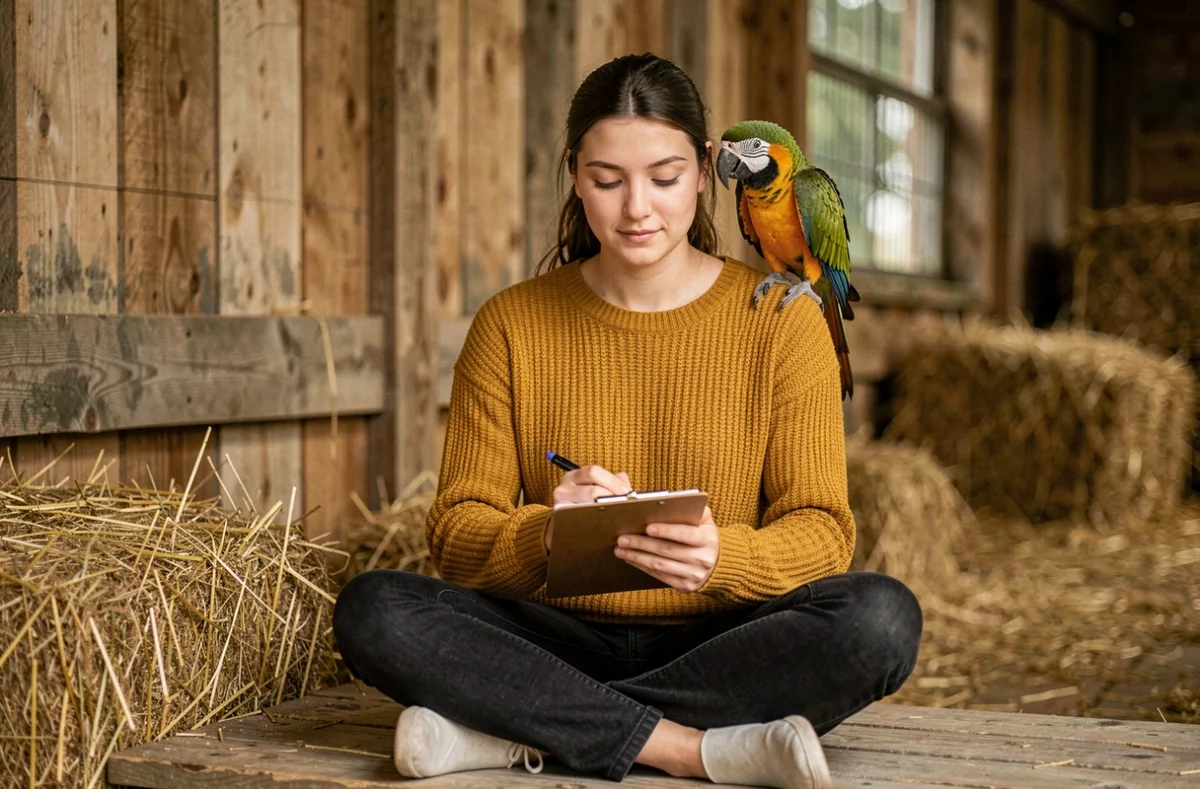
- Observe your animal for ten minutes a day without interaction, just to note its recurring postures
- Adapt your own posture: getting down to the animal’s level reduces its stress during interactions
- Eliminate inconsistencies between voice and gesture, the main source of confusion for dogs
- Respect withdrawal signals (turning head, licking nose) instead of forcing contact
These adjustments require neither specific training nor equipment. They are based on one principle: animal communication starts with listening, not speaking.
Research in artificial intelligence will likely provide more refined analytical tools in the coming years. Studies on animal vocalizations open up perspectives for the conservation of wild species. For dog and cat owners, the most accessible lever remains the attentive observation of the signals their companion emits each day, without algorithms, without applications, with patience and consistency.