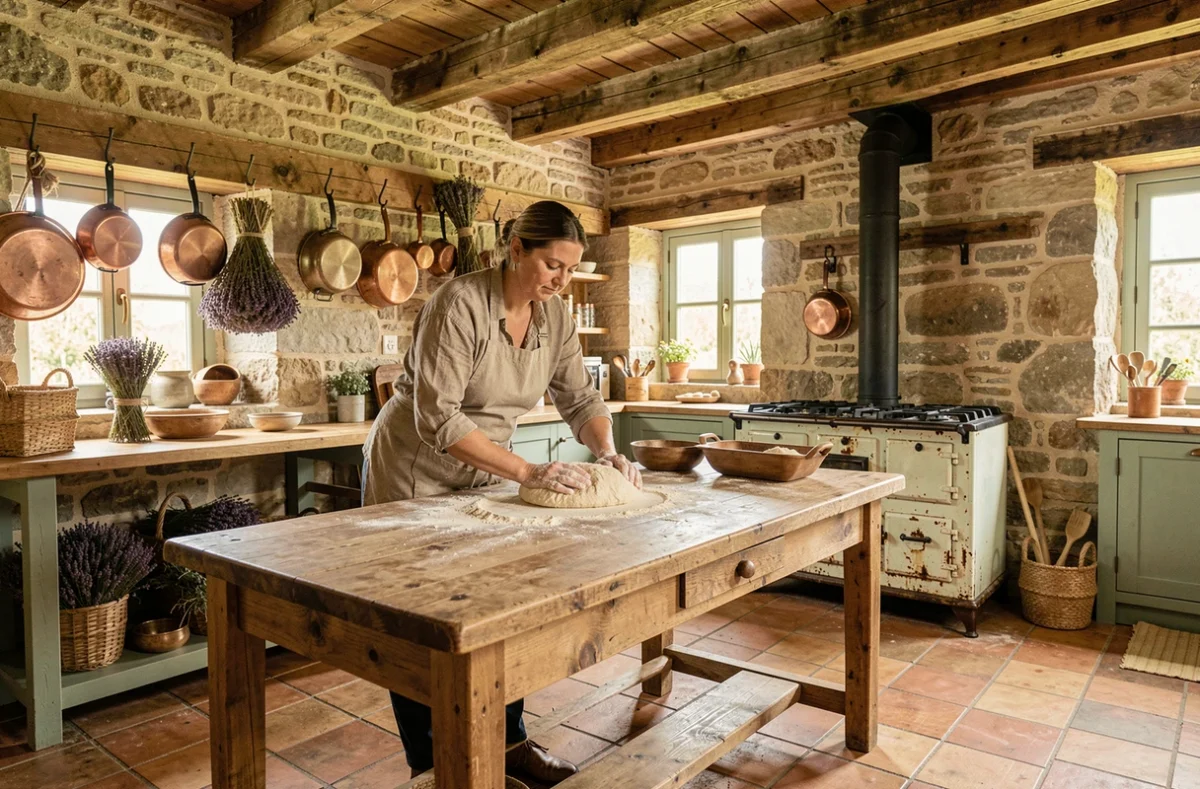
A house in the countryside is primarily a promise: that of thick walls, creaking shutters, and a garden where time slows down. But behind the charm of exposed beams and old tiles, there are technical realities that decoration alone cannot resolve. Insulation, energy classification, choice of materials: the authenticity of a rural house is built as much in the visible details as in the invisible constraints.
Energy classification of rural houses: what has changed since 2025
Have you noticed that some real estate listings now display an energy performance diagnosis (DPE) that is quite different from two years ago? This is no coincidence. Regulations have changed, and they directly affect country houses.
Since January 1, 2025, properties classified as G can no longer be rented in mainland France. Class F properties will follow in 2028, and class E properties in 2034. For an old building heated with oil or wood, often poorly insulated, this timeline changes everything.
Another development: a decree published in the Official Journal on August 26, 2025, modified the conversion coefficient of electricity to primary energy, changing from 2.3 to 1.9 on January 1, 2026. In practical terms, a house heated with electricity can see its classification improve without any work. If you are considering buying or renting a country house equipped with electric radiators, make sure that the DPE has been recalculated with this new coefficient.
For those who wish to explore the world of rural houses in all their diversity, it is possible to visit the house page on La Petite Maison dans la Prairie and find concrete inspirations there.
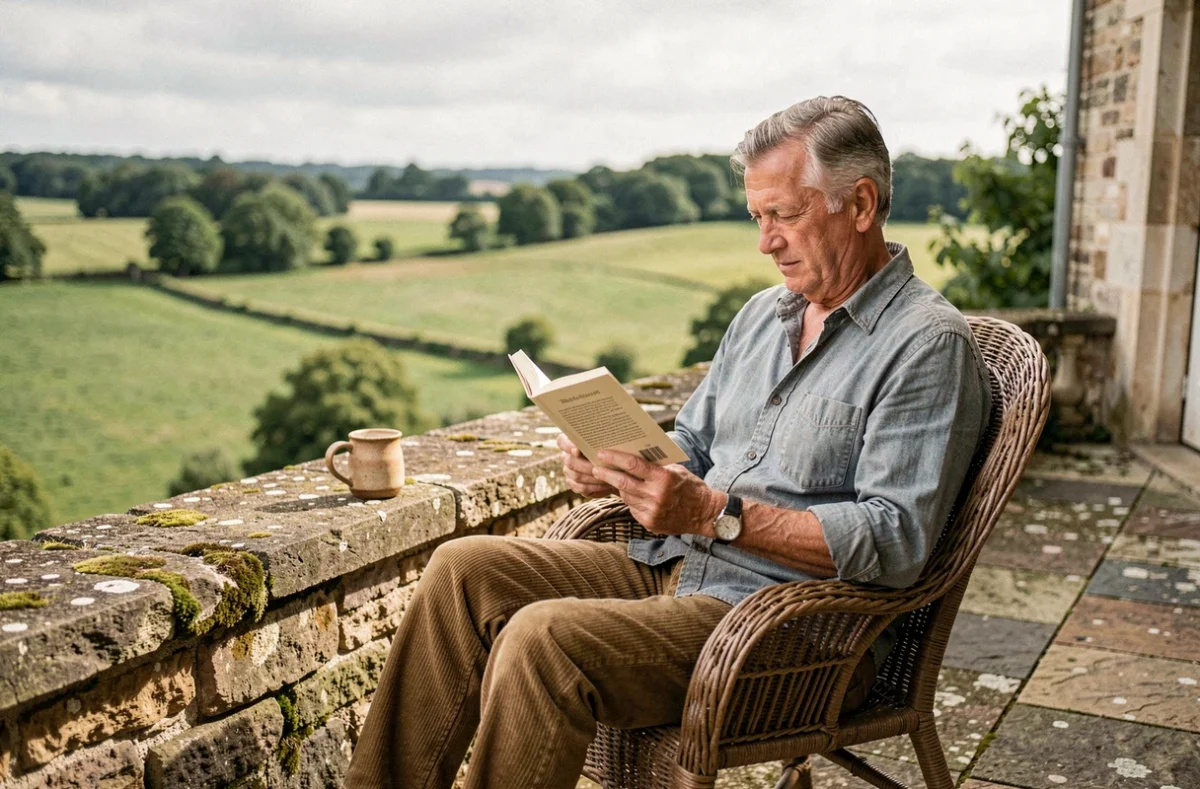
Renovating an old house in the countryside: where to start
The temptation is great to tackle the kitchen or the bathroom first. These are the most visible rooms. But in an old house, the order of the work matters as much as its nature.
The bundle of work, more effective than isolated interventions
To move a house from classification F or G to classification D, a bundle of combined works is generally necessary. Insulating the attic, replacing windows, updating the heating system: these interventions work together.
Addressing insulation without revising ventilation, for example, creates humidity problems. Replacing a boiler without insulating the walls reduces energy gains to almost nothing. The holistic approach costs more upfront, but it avoids having to redo everything two years later.
Materials that respect the character of the house
A stone country house naturally breathes. Installing a waterproof synthetic insulation on stone walls can block this regulation and cause rising damp. Bio-sourced insulations (wood fiber, hemp, sheep wool) adapt better to this type of building.
- Wood fiber is installed in rigid panels on the walls and offers good thermal lag, keeping it cool in summer.
- Hemp, mixed with lime, allows for insulating coatings compatible with old stone or cob walls.
- Sheep wool is particularly suitable for attics, thanks to its ability to absorb moisture without losing its insulating properties.
Choosing these materials means preserving the spirit of the countryside while meeting the requirements of the DPE.
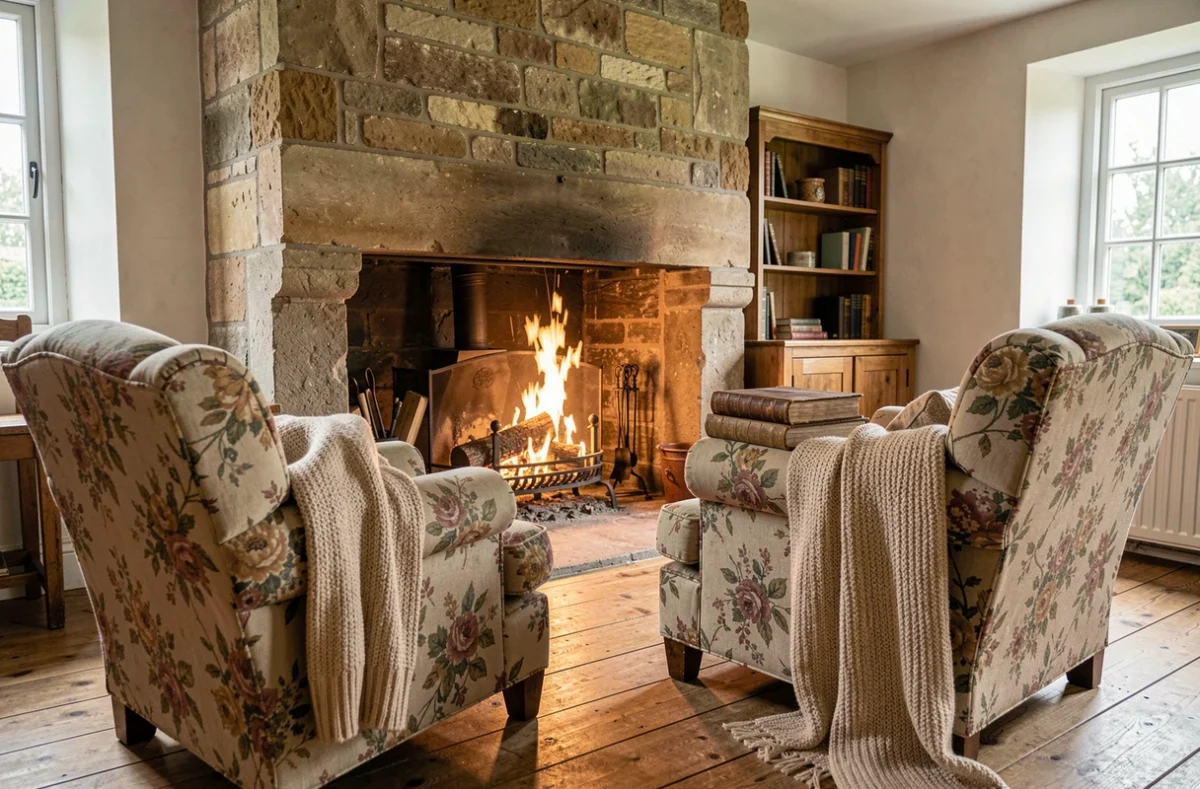
Country interior decoration: beyond style, lasting choices
The country style is not just about placing a wicker basket on a vintage dresser. What distinguishes a successful rural house is the coherence between the building and the decor.
Old tiles, for example, are not just an aesthetic choice. Their thermal mass stores heat in winter and keeps it cool in summer. Replacing them with modern thin tiles means losing this natural regulation.
Raw wood, omnipresent in country houses, requires appropriate treatment. A glossy varnish on a century-old oak beam distorts the material. A hard oil or natural wax protects the wood while preserving its patina.
On the furniture side, the chic country trend mixes antique pieces with contemporary elements. A walnut farmhouse table with modern metal chairs creates a contrast that works. The simple rule: one strong contemporary element per room is enough to modernize the whole without betraying the spirit of the place.
Climate adaptation: preparing your country house for hot summers
Old rural houses were designed for the climate of their region. Thick walls, small openings on the south side, solid shutters: everything contributed to passive temperature regulation. But recent summers have put these systems to the test.
Why this topic? Because climate adaptation is becoming a priority for homeowners, according to an Ipsos survey on real estate. Buyers are now questioning summer comfort as much as heating bills.
- Vegetated pergolas (vine, wisteria, hops) create natural shade on exposed facades, reducing heat transmitted to the walls.
- Cross-ventilation at night, facilitated by opening opposite windows, evacuates heat accumulated during the day.
- Exterior awnings made of fabric or wood block solar radiation before it reaches the glazing, whereas an interior curtain lets heat through.
These solutions do not necessarily cost a lot. They fit into the very logic of the country house: using the environment rather than fighting against it.
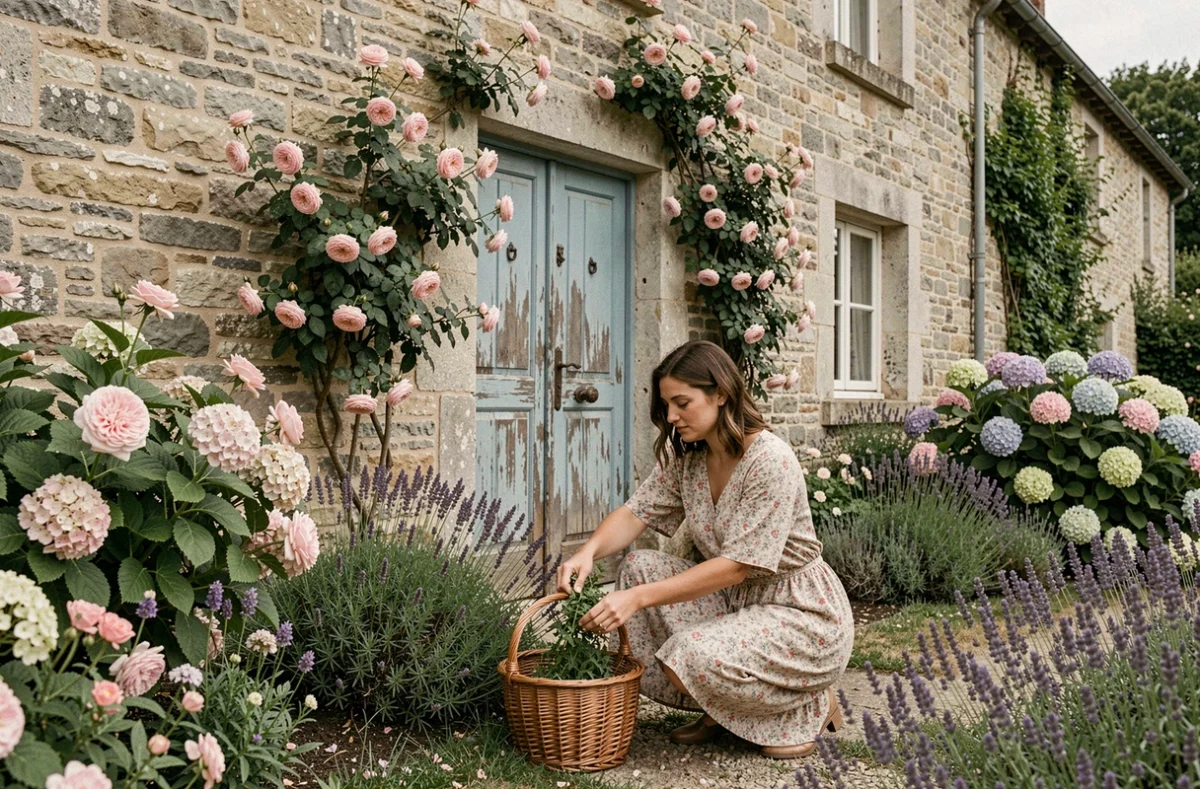
A country house that keeps its promises is one where the charm of the beams is accompanied by a correct DPE, where the stone walls breathe under suitable insulation, and where summers remain livable without air conditioning. The true country style is when the invisible works as well as the visible.