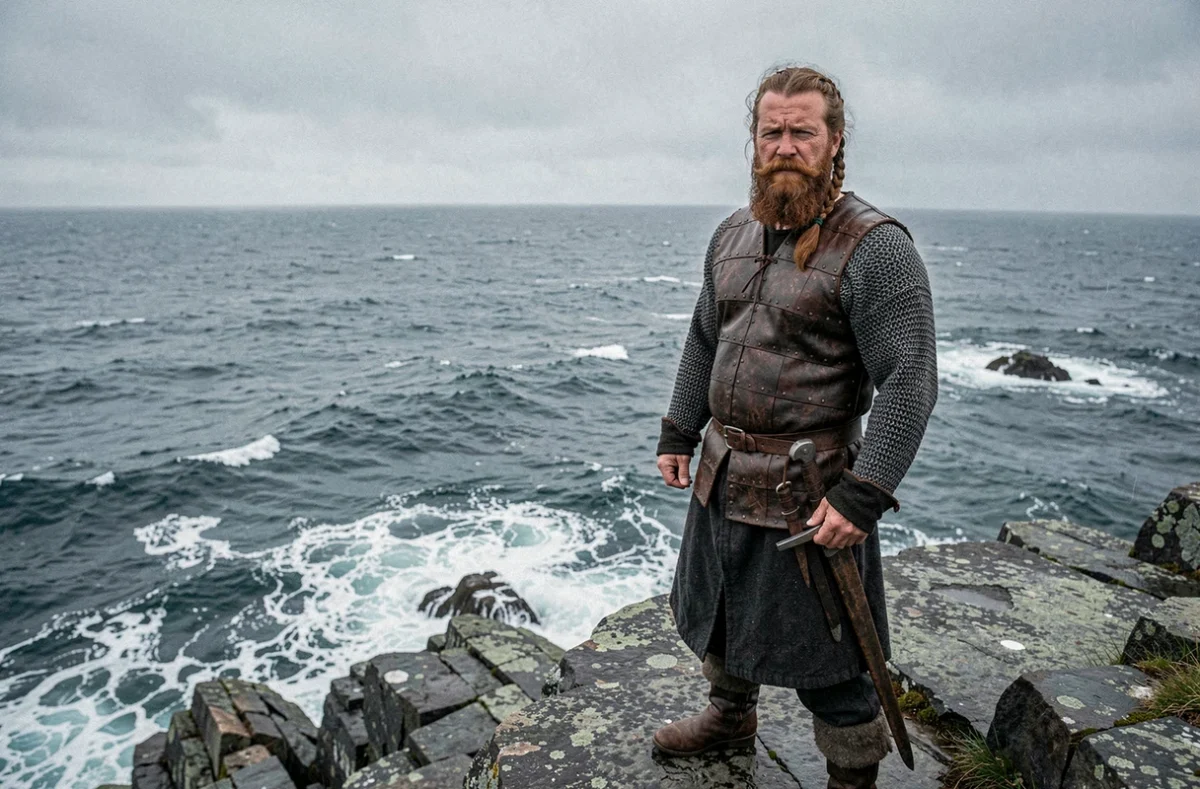
Björn Ironside is one of the most frequently mentioned figures of the Viking Age, yet reliable information about him can be summed up in just a few lines. The stories about him are set in the 9th century, while the texts that recount them mostly date from the 13th century. This gap of several hundred years between the supposed events and their being written down raises a methodological problem that the TV series Vikings has done much to obscure.
Written sources on Björn Ironside: three texts, three versions
Before detailing the exploits attributed to Björn, it is important to consider how fragile the documentary evidence is. Three main texts inform what is said about him, and each gives a different version of events.
| Source | Approximate date | Origin | Role attributed to Björn |
|---|---|---|---|
| Ragnar Lodbrok’s Saga | 13th century | Iceland | Son of Ragnar and Aslaug, takes part in raids with his brothers |
| Tale of Ragnar’s Sons | 13th century | Iceland | Raid leader, expedition to the Mediterranean |
| Gesta Danorum (Saxo Grammaticus) | Early 13th century | Denmark | Son of Ragnar, with his parentage and mother varying between passages |
None of these sources is contemporary with the events. They were written around three to four centuries after Björn’s supposed lifetime. Frankish and Arab chronicles describing Norse raids in the Mediterranean during the 9th century mention Viking leaders, but formally identifying one of them as Björn remains a hypothesis, not a fact attested by a document that names him unambiguously.
A detailed article also examines this tension between Björn Ironside, myth and historical reality, distinguishing what the sagas claim from what archaeology and chronicles can actually verify.
Viking expedition to the Mediterranean: was Björn its leader?
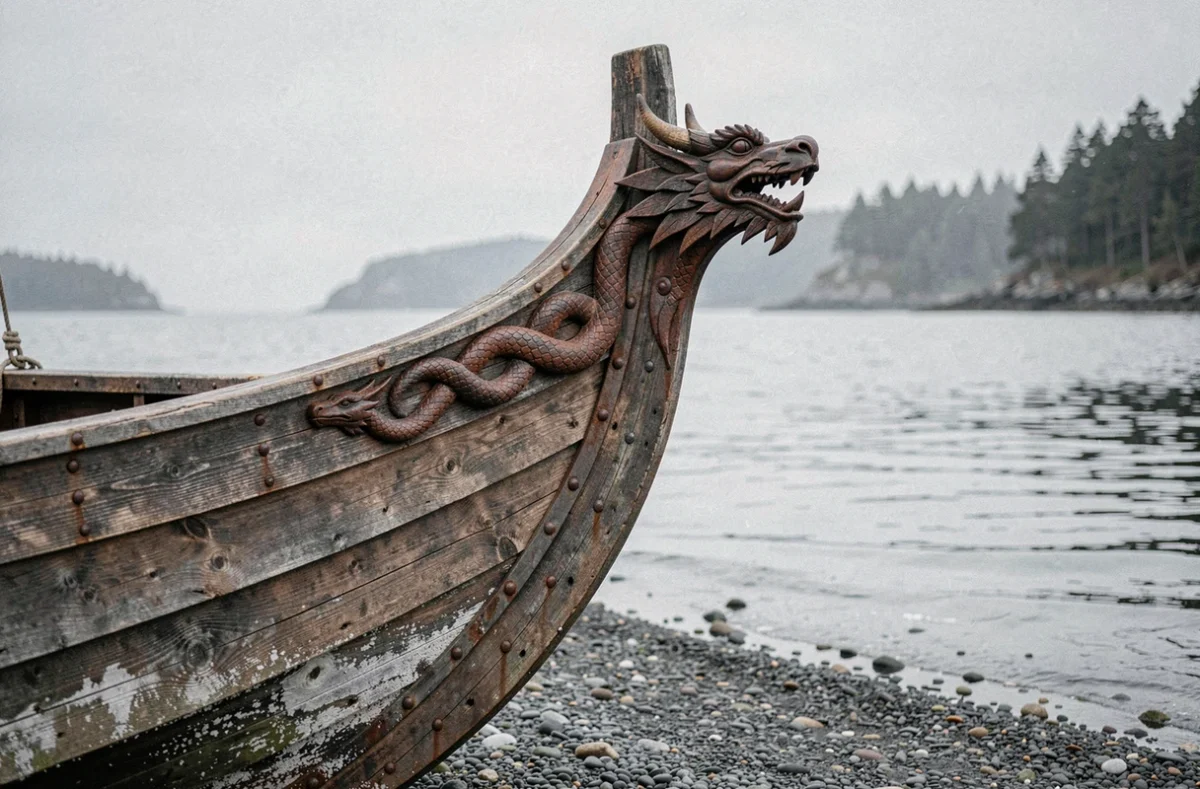
The most spectacular episode attributed to Björn is a naval expedition said to have reached the Mediterranean, touching the Iberian Peninsula, the North African coast and Italy. The Icelandic sagas place him at the head of this fleet alongside Hastein (or Hásteinn).
Separate traditions confirm that Norse raids did take place in this region during the 9th century. Medieval Arab accounts describe attacks on the Iberian coast. Frankish chronicles report Scandinavian fleets moving south.
The problem comes down to one specific point: contemporary sources do not identify Björn with certainty as one of the raiders. The association between the saga leader and the historical leader or leaders of these expeditions rests on a comparison of texts written at very different times and in very different contexts.
The stratagem at Luna: legendary tale, not verified fact
The famous episode in which Björn supposedly faked his death to enter an Italian city (often identified as Luna, and confused with Rome) belongs to the realm of legend. The available sources document the story’s circulation in the sagas, but that does not confirm its truth.
This stratagem is a recurring narrative motif in medieval Scandinavian literature. It is attributed to other figures as well, further weakening its value as biographical evidence specific to Björn.
The Munsö dynasty and the title of King of Sweden: a disputed lineage
Several medieval texts present Björn as the founder of the Munsö dynasty, a line of Swedish rulers. A burial mound on the island of Munsö, in Lake Mälaren, is traditionally attributed to him.
This association raises several difficulties:
- Medieval Scandinavian royal genealogies frequently mix historical figures with legendary ones to legitimize ruling dynasties.
- Making Björn the “first king” of this dynasty rests on a later reconstruction, not on a contemporary administrative document or runic inscription.
- The Munsö burial mound has yielded no archaeological evidence that would formally identify its occupant as Björn Ironside.
Dynastic tradition and historical evidence are two distinct categories. Articles and websites that present Björn as the proven founder of the Munsö dynasty do not always distinguish between these two levels of certainty.
Björn Ironside in the TV series Vikings: differences from the sagas
The TV series Vikings (History Channel) made Björn one of its central characters, played by Alexander Ludwig. He is portrayed as the son of Ragnar Lothbrok and Lagertha.
In the sagas, Björn’s mother is Aslaug (or Thora, depending on the version), not Lagertha. This change to his maternal lineage significantly alters the family dynamic and has no basis in the medieval texts.
Other notable differences between the series and the written sources include:
- The chronology of events is compressed and rearranged for dramatic purposes.
- Björn’s death in the series differs from the saga accounts, which do not even agree on the circumstances of his death.
- His interactions with certain historical figures (such as Rollo) are deliberate anachronisms introduced by the writers.
- The series turns a vaguely defined character into a straightforward hero, whereas the sagas offer fragments that are sometimes contradictory.
What we know and what we assume about this Viking leader
The name Björn Járnsíða appears in Icelandic sagas and in Swedish dynastic tradition. His nickname, “Ironside,” is not explained consistently by the sources: some attribute it to his resilience in battle, others to a possible protective breastplate. No explanation is definitive.
Norse raids in the Mediterranean during the 9th century are documented in multiple traditions, but Björn’s precise role in these expeditions remains a reconstruction based on later texts. The gap between the saga character and the historical figure remains impossible to bridge with the sources currently available.
What makes Björn such a fascinating figure is precisely this shadowy area: enough stories to fuel a legend, but not enough evidence to write a biography.