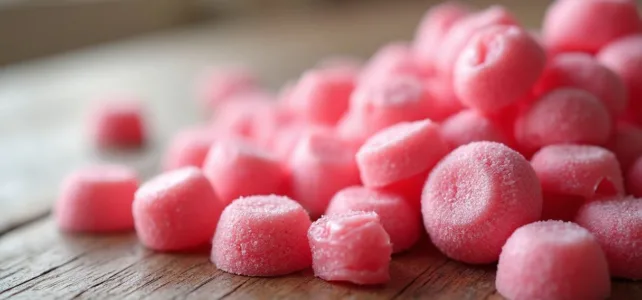
Pink candies, these little treats with delicate hues, instantly evoke childhood memories and moments of simple happiness. Their pastel shade, often associated with tenderness and innocence, transcends generations, offering both the young and adults a sweet interlude in the frenzy of everyday life. From the famous strawberry marshmallow to swirling lollipops, these confections come in a multitude of shapes and flavors, each telling its unique story. The pink candy is not just a taste pleasure; it is also a true madeleine de Proust, reviving buried emotions and forgotten dreams.
The Origins of Pink Candy
Pink candies are not a recent invention. Their history is rooted in ancient traditions and know-how passed down from generation to generation.
In antiquity, confections were often reserved for the elites. The first candies were made from honey and rare spices. Over time, sugar gradually replaced honey, making candies more accessible to everyone. The pink candy, with its evocative color and often fruity taste, became a star of confections.
It was at the beginning of the 20th century that the popularity of colored candies truly exploded. Advances in food chemistry allowed for the creation of bright and varied shades, making candies even more appealing to both children and adults. Today, pink candy comes in a multitude of forms: marshmallows, lollipops, caramels, offering a palette of tastes and textures to satisfy all cravings.
Consumers’ Favorite Pink Candies
Pink candies, with their joyful hue and sweet flavors, captivate candy lovers.
- Marshmallows: these fluffy treats can be toasted over a campfire or simply enjoyed as they are.
- Strawberry Lollipops: a timeless classic, these lollipops combine the sweetness of sugar with the fruity aroma of strawberry.
- Dragibus: these small jelly candies in bright colors, including pink, are an irresistible delight for little palates.
- Heart-Shaped Candies: perfect for gifting to friends or family as a sign of affection, these candies are as delicious as they are aesthetic.
The varieties are numerous. By checking this link, you can discover a detailed list of the pink candies most loved by children.
The Components of Pink Candy
Pink candies combine several key ingredients. Sugar remains the main component, providing the essential sweet base. Then, natural or synthetic flavors come to give the characteristic taste, often fruity, that we cherish so much. Colorants, although they can be natural, are often synthetic to ensure bright and consistent shades. Finally, gelatin or vegetarian substitutes give the candies their soft or chewy texture. This clever combination of simple ingredients allows pink candies to offer a unique and unforgettable tasting experience.
Popular Culture Surrounding Pink Candy
In films and television series, pink candies are frequently used to evoke moments of tenderness or nostalgia. Brands also play on this imagery to promote derivative products and limited editions. Moreover, during birthdays and celebrations, pink candies are often chosen for their aesthetics and their ability to fit into a pastel or girly theme. Over the years, they have become a universal symbol of sweetness and happiness, transcending cultural and generational boundaries.
Pink candy continues to charm with its simplicity and its ability to evoke happy memories. Whether young or old, the temptation of a little pink treat is always present. By savoring these candies, we reconnect with our inner child, the one who finds magic in little things. Whether for their taste, their color, or the memories they evoke, pink candies have many bright days ahead, ready to enchant new generations.