
The DTC253F29 code (manufacturer reference P253F, also known as DF1020) indicates an engine oil dilution deemed implausible by the ECU. On Renault diesel engines equipped with a particulate filter, this fault often raises the same question: should an engine replacement be considered? The short answer is no, provided the diagnosis is conducted in the correct order.
Leaking injector and diesel oil dilution: the lead that standard diagnostics overlook
The majority of documented interventions regarding the P253F focus on the DPF and aborted regenerations. In the workshop, we observe a distinct cause, less visible with the diagnostic tool: a leaking injector that continuously enriches the mixture.
An injector whose seat no longer closes properly allows diesel to pass after the combustion phase. This unburned fuel travels down the piston rings and ends up in the sump. The ECU, which estimates oil quality through modeling (mileage, temperature, regeneration cycles), does not directly detect this intrusion. It deduces it when parameters fall outside its plausibility range.
Before touching the DPF or forcing a regeneration, we recommend checking the return flow of the injectors. A significant discrepancy between cylinders points towards a targeted replacement, which resolves the dilution without intervening on the engine block.
To delve deeper into the mechanisms behind the dtc253f29 code on Renault, checking the injectors remains a prerequisite often ignored by dealership procedures, which jump straight to the oil change and ECU update.
Laboratory oil analysis: the only way to distinguish between dilution and internal wear
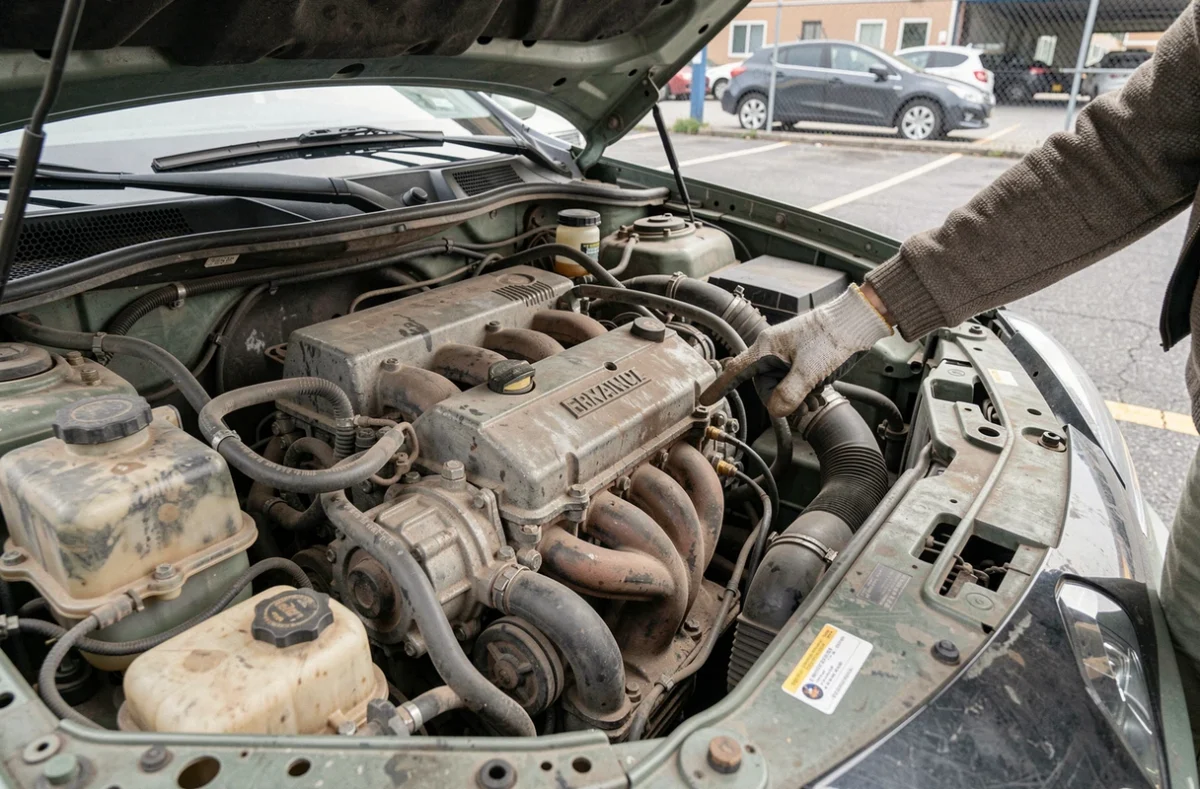
The P253F code does not measure the actual composition of the oil. It relies on a plausibility algorithm integrated into the engine ECU. Two very different situations can produce the same fault: a simple dilution by diesel (reversible) or advanced mechanical wear with the presence of metals in the lubricant.
Only a laboratory oil analysis can distinguish between these two scenarios. The sample, taken hot before the oil change, is examined across several parameters:
- The dilution rate by fuel, which confirms or denies the presence of diesel in the sump and quantifies the contamination
- The residual viscosity, which indicates whether the oil still retains its lubricating properties under thermal load
- The concentration of wear metals (iron, copper, aluminum), which reveals mechanical degradation of bearings, rings, or liners
If the analysis shows only fuel dilution with metals within normal values, the engine has not suffered any structural damage. An oil change with a filter, combined with resolving the cause (injector, DPF, driving profile), is sufficient to get back on track. However, abnormally high levels of iron or copper indicate already engaged wear, and only then does the question of engine replacement arise.
DPF regeneration and short trips: why the fault returns after an oil change
We observe a recurring pattern: the mechanic performs the oil change, resets the OCS (Oil Condition Sensor) counter via the diagnostic tool, clears the P253F code, and the fault reappears a few weeks later. The oil change alone does not address the cause of the dilution.
On the 1.5 dCi and 1.6 dCi engines (Clio IV, Mégane IV, Trafic III), the post-injection intended to regenerate the DPF injects fuel late in the cycle. If the regeneration does not reach its target temperature, this additional fuel is not burned. It migrates to the sump and dilutes the oil. Short urban trips, under ten kilometers, systematically interrupt this process.

The correct procedure after an oil change involves checking the condition of the DPF (clogging rate via ECU data), then making a sufficiently long highway trip to allow for a complete regeneration. Forcing a static regeneration via the diagnostic tool on already contaminated oil is counterproductive: we burn the soot, but maintain degraded lubricant in the circuit.
ECU update: the unknown software lock
A point documented by feedback from independent workshops and confirmed by Autel technical support: some software versions of the engine ECU prevent the clearing of the DTC253F29 code, even after a successful oil change and regeneration. The fault remains in a permanent status.
In this case, only a firmware update of the ECU at Renault (or via a tool with manufacturer calibrations) can lift the lock. This is neither a mechanical issue nor an oil issue, but a software bug that the dealership network is aware of.
Engine replacement on P253F code: the rare cases where the question truly arises
A standard engine exchange represents a disproportionate cost compared to what the P253F code indicates in the vast majority of cases. Replacement is only justified if the oil analysis reveals severe mechanical wear combined with tangible symptoms: loss of compression, persistent blue smoke, connecting rod noise, or oil consumption beyond dilution.
If the engine runs normally, does not consume oil outside of diesel dilution, and shows no knocking, the block is healthy. The P253F code is then a warning signal regarding the lubrication circuit and the pollution control system, not a verdict on the internal condition of the engine.
- Engine without abnormal noise, correct compression, normal wear metals: oil change, addressing the cause (DPF, injector, driving profile), ECU update if necessary
- High wear metals but functional engine: close monitoring with regular oil analyses, reducing oil change intervals
- Confirmed advanced wear with mechanical symptoms: engine replacement or rebuild justified, with the P253F being just one symptom among others
The reflex to replace an engine based on a single fault code reflects a diagnostic failure, not an engine failure. On the affected Renault diesels, the sequence of injectors, oil, DPF, software resolves nearly all cases without opening the block.