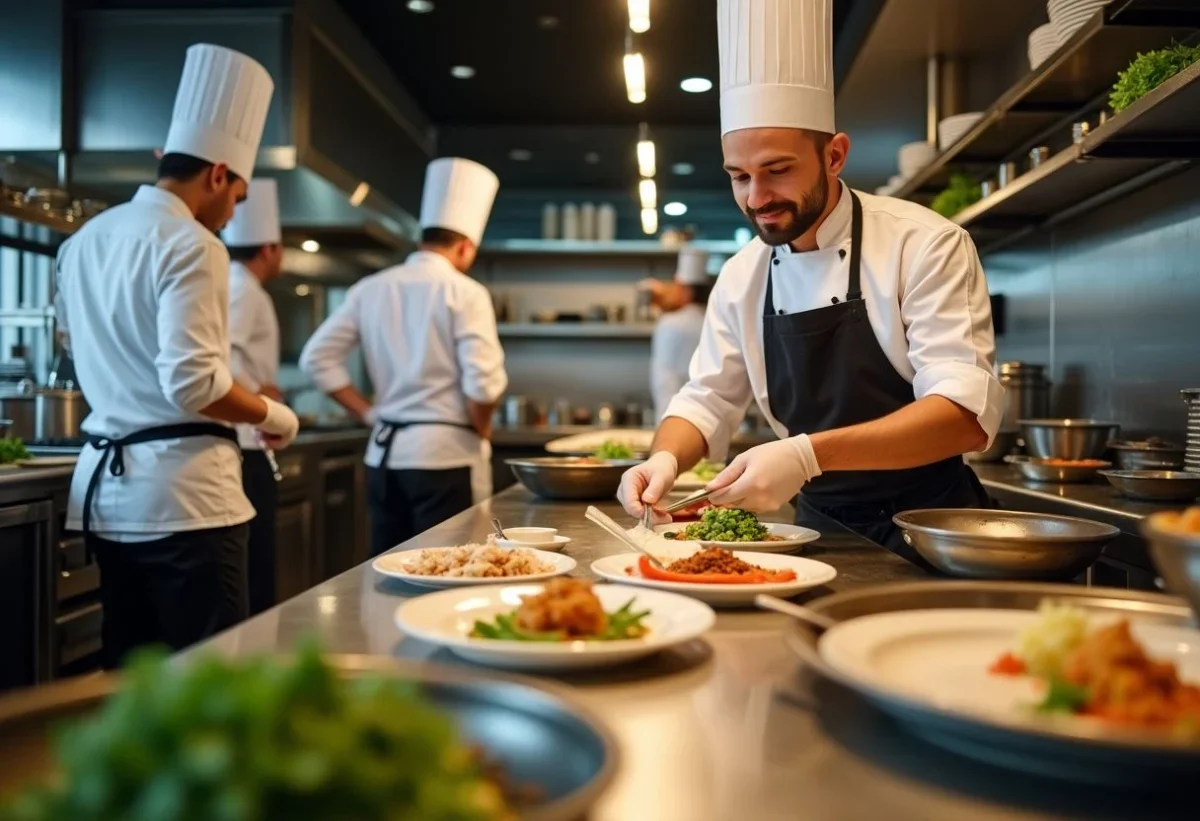
Establishing a restaurant kitchen that meets the highest standards is a challenge that every restaurateur must face to ensure not only customer satisfaction but also the sustainability of their establishment. Every detail, from the layout to the equipment and staff training, must be meticulously planned to ensure optimal efficiency and impeccable food safety. Understanding the applicable standards and applying them wisely is essential to provide a quality culinary experience while complying with current health regulations.
Health Standards: Ensuring Perfect Hygiene
Food hygiene is an undeniable priority for any restaurant kitchen. Health standards serve to ensure that all food is prepared, handled, and served under optimal safety conditions.
First of all, the cleanliness of the premises is paramount. Every surface, whether it be worktops, floors, or equipment, must be cleaned regularly to avoid any cross-contamination. Cleaning protocols must be strictly followed and adapted to the different areas of the kitchen.
Next, adhering to the cold chain is essential for the preservation of perishable goods. Refrigerators and freezers must be equipped with thermometers to ensure that the temperature remains constant and suitable for each category of food.
The staff also plays a crucial role in maintaining hygiene. Regular training on hygiene rules and good food practices is essential. Every employee must wear appropriate clothing, including gloves and hair coverings, to minimize the risk of contamination.
Safety Standards: Preventing Accidents
Ensuring the safety of employees and customers is a primary responsibility for restaurateurs. Strict safety standards must be implemented to prevent accidents within the kitchen.
- Personal protective equipment is essential. Cut-resistant gloves and non-slip shoes contribute to the safety of the cooks.
- An effective ventilation system is imperative to evacuate smoke and odors while maintaining a healthy atmosphere. This also prevents the accumulation of grease that could increase the risk of fire.
- Fire extinguishers and smoke detectors must be installed in strategic locations, and staff must be trained in their use. Evacuation drills are an excellent practice to prepare staff to react quickly in case of an emergency.
Layout Standards: Optimizing Space and Equipment
A well-designed kitchen is essential for the smooth operation and comfort of the staff. Optimizing space and selecting the catering equipment are crucial for ensuring efficient operation.
- Circulation: The layout should allow for smooth circulation to avoid collisions and improve efficiency. The different areas of the kitchen should be clearly defined.
- Equipment: Choose quality equipment suitable for the expected service volume. Their arrangement should take into account the logical sequence of culinary preparation steps.
- Ergonomics: Workstations should be adjustable to minimize fatigue and muscle strain. Special attention should be given to the height of work surfaces and the arrangement of frequently used tools.
Environmental Standards: Promoting Sustainability
In an increasingly eco-conscious world, adhering to environmental standards has become a major concern for restaurant kitchens.
Reducing food waste is a priority. Implementing composting and recycling practices helps to decrease the ecological footprint of the establishment. Partnerships with local suppliers also help to reduce the transportation of goods and encourage sustainable agriculture.
Energy efficiency is another essential aspect. Using energy-efficient appliances, such as modern ovens and refrigerators, reduces energy consumption. Installing heat recovery systems can also contribute to the overall efficiency of the kitchen.
Finally, water management must be optimized. Installing flow-reduction devices is an effective solution to limit consumption without compromising service quality.