
Stem cells refer to cells that can differentiate into several specialized cell types and self-renew. When applied to the scalp, they aim to regenerate failing hair follicles rather than simply relocating grafts from one area to another. In Switzerland, several clinics already offer protocols incorporating these cells into their hair transplants, but the regulatory framework surrounding these practices warrants careful examination.
Swiss Regulation on Hair Stem Cells: What Swissmedic Really Allows
A fundamental point distinguishes Switzerland from most neighboring countries. Since 2023, Swissmedic does not recognize autologous stem cell injections for baldness as an officially authorized indication. The Swiss Medical Association (FMH) reminded the same year, in its position statement on cell therapies in aesthetic medicine, that these procedures remain classified as non-covered aesthetic interventions under basic insurance (LAMal).
This classification has direct consequences for patients. The total cost is their responsibility, with no possibility of reimbursement. Clinics must also adhere to strict obligations regarding the preparation of the injected cells.
A detailed article on stem cells for hair on Francoeur discusses the clinical protocols offered in Switzerland and the results observed in this particular regulatory context.
Between 2024 and 2025, cantonal inspections intensified their controls. Several Swiss clinics had to reclassify their treatments as “enriched PRP” or “minimally manipulated cellular concentrate.” The reason: SVF (stromal vascular fraction) preparations are considered therapeutic products subject to authorization once they exceed the threshold of minimal manipulation, according to a report by the Conference of Cantonal Directors of Health (CDS) published in November 2024.
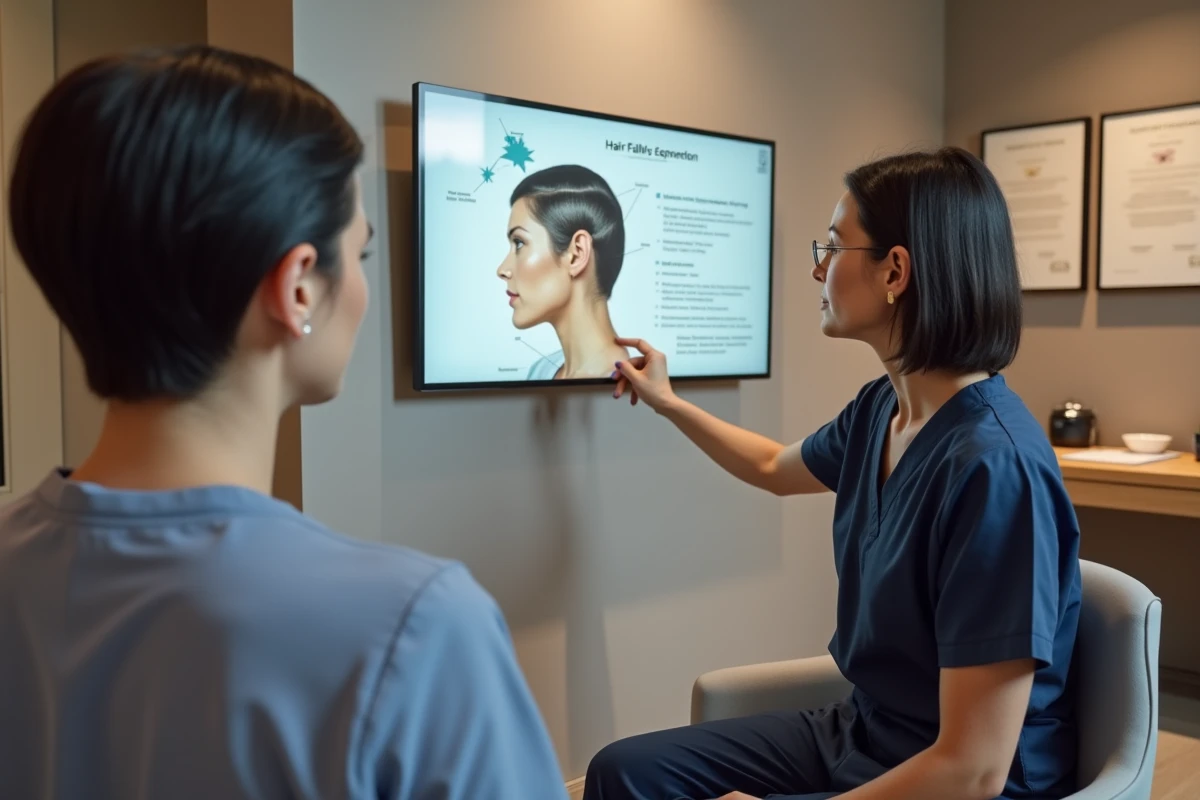
SVF, Enriched PRP, and MesoGraft: Differences Between Hair Protocols
Three terms frequently appear in the offerings of Swiss clinics. Understanding what they encompass allows for an evaluation of what each treatment actually proposes.
- SVF (stromal vascular fraction): a concentrate of cells extracted from the patient’s adipose tissue, containing mesenchymal stem cells. This protocol requires a micro-harvest of fat, followed by centrifugation. It is the most closely monitored preparation by cantonal authorities, as it often exceeds the scope of minimal manipulation.
- Enriched PRP: platelet-rich plasma, obtained from the patient’s blood, is sometimes combined with growth factors or micro-tissue fragments. This protocol is simpler to perform and less regulated, but its effect on follicular regeneration is more limited than that claimed by SVF.
- MesoGraft (Rigenera technology): an autologous technique where micro-grafts are taken directly from the patient’s scalp, mechanically ground, and then reinjected. The process is done in a single session, and the Adonis clinic in Geneva offers it starting at 1,900 CHF. The mechanical (and not enzymatic) manipulation allows this protocol to remain within the framework of minimal manipulation.
The distinction between these approaches is not anecdotal. The regulatory status of the protocol determines its legality and the quality of the associated medical follow-up. A treatment reclassified as “minimally manipulated cellular concentrate” has not undergone the same validation steps as an innovative therapy drug.
Swiss Clinical Research on Follicular Regeneration: Current State
Switzerland stands out in Europe as its clinical trials on follicular regeneration using stem cells are primarily conducted by university dermatology departments, rather than private biotechnology companies. This particularity influences the methodological rigor of studies, as well as their publication pace.
In terms of fundamental research, studies conducted in other countries shed light on the real potential of these approaches. A study from the University of Pennsylvania published in The Journal of Clinical Investigation showed that hair follicles retain their stem cells even in cases of alopecia, but these do not transform into active cells. The problem is therefore not the absence of stem cells, but their inability to activate.
Researchers from the University of California, Irvine, identified the molecule SCUBE3, capable of stimulating hair growth on human follicles grafted onto mice, according to a publication in Developmental Cell in 2022. Human testing has not yet begun.

What This Means for Current Transplants
The protocols offered in clinics today are based on a logic of stimulating the follicular microenvironment. They do not recreate new follicles. The HST method developed by Dr. Gho, practiced at the Hair Science clinic in Geneva, claims to multiply follicular units rather than simply relocating them, but this approach remains distinct from regeneration by stem cells in the strict sense.
No clinically available protocol yet allows for the creation of hair follicles from scratch. Current treatments improve hair density by combining mechanical transplantation and biological stimulation, which represents a real advancement over traditional FUE grafts, without constituting the technological breakthrough sometimes claimed.
Hair Stem Cells in Switzerland: Criteria for Evaluating a Clinic
The Swiss framework offers an advantage: cantonal oversight requires practitioners to maintain minimal transparency regarding the nature of their preparations. Several elements help distinguish a serious offering from marketing rhetoric.
- The clinic explicitly states whether the preparation is classified as “minimally manipulated” or if it has Swissmedic authorization for a cellular therapy product.
- The responsible physician is identifiable and registered with the FMH, with a specialization in dermatology or plastic surgery.
- The results presented are based on standardized photographic follow-up over several months, rather than isolated testimonials.
- The informed consent mentions the non-reimbursable nature of the treatment and the absence of a guarantee of results.
French patients considering treatment in Switzerland should also verify that post-operative follow-up is organized, including remotely. A serious protocol provides for at least two follow-up consultations within six months following the intervention.
Hair transplant using stem cells remains a technique under development. Real advancements are being made, Swiss university research is progressing rigorously, but the gap between scientific publications and the commercial promises of certain clinics remains wide. Checking the regulatory framework before committing remains the most useful precaution.