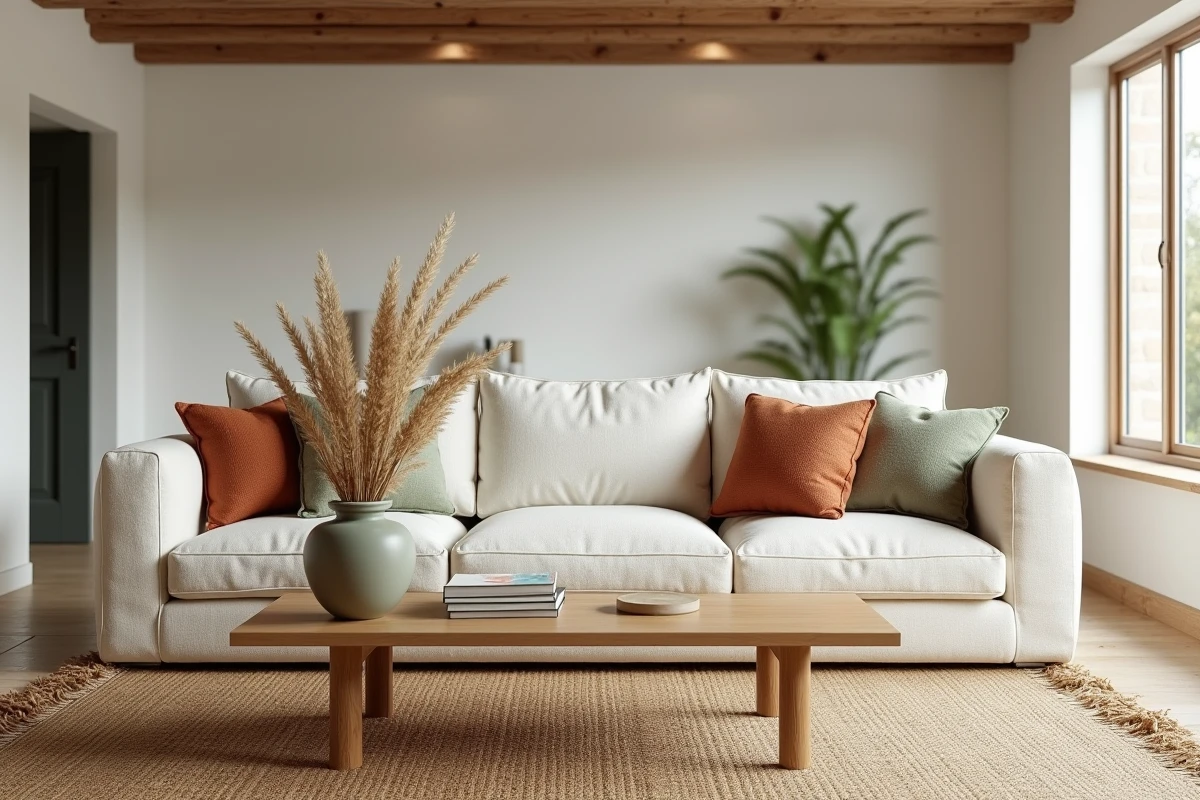
A sofa that tires you out, walls that are too white, a living room that no longer catches the eye: we all know that moment when the interior seems frozen. Transforming your decor doesn’t necessarily require a complete renovation. Sometimes, a few material choices, a focus on lighting, or repositioning a piece of furniture can radically change the atmosphere of a room.
Bio-sourced materials in interior decor: from wall panels to headboards
We often talk about wood and rattan when it comes to natural decoration. Trade shows like Maison&Objet have pushed the envelope further for several seasons, showcasing materials that are not yet found in most interiors.
Mycelium panels (made from mushrooms) now serve as wall coverings or screens in living spaces. Bricks made from shell waste replace traditional tiling in some bathrooms. Fabrics made from pineapple or banana fibers adorn headboards or living room cushions.
These are no longer gallery curiosities. They can be found with specialized suppliers, and their visual appeal adds a texture that synthetic materials cannot replicate. To explore other concrete options, you can check the decor on the Maison Pro website, which brings together a variety of styles and materials.
The interest in these materials goes beyond aesthetics. Their irregular surface slightly absorbs sound, which alters the acoustics of an open space. A mycelium screen between the kitchen and living room, for example, filters light while dampening the sounds of dishes.
Creating a screen-free zone: decor and layout of a space without screens
The Paris Fair and several housing observatories report a growing demand for spaces intentionally devoid of screens in homes. We’re not talking about radical minimalism, but rather a reading nook without outlets, a living room where devices disappear into closed storage.
In practice, this changes the decor in three ways.
- Lighting becomes softer: directional spotlights aimed at a screen are replaced by table lamps, dimmable wall sconces, or low-intensity string lights.
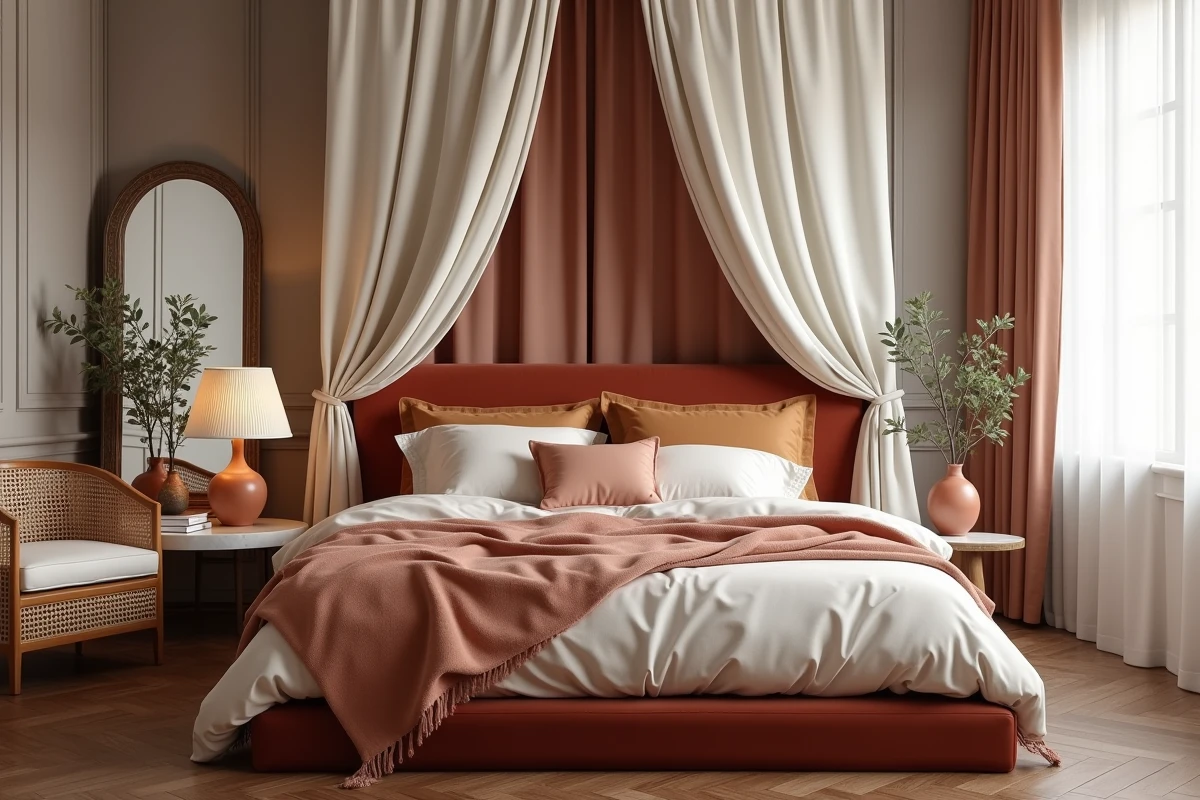
- Furniture becomes enveloping: high-backed chairs, boucle wool poufs, deep benches. The body settles differently when there is no television in front.
- Walls gain texture: lime plaster, textile panels, embossed wallpaper. Without a screen to capture the gaze, wall surfaces become the focal point of the room.
This type of layout works particularly well in a master bedroom or a corner of the living room. Feedback varies on this point, but several designers note that these areas often end up being the most used spaces in the home.
Colors and light renovations: transforming a living room or kitchen without tearing everything down
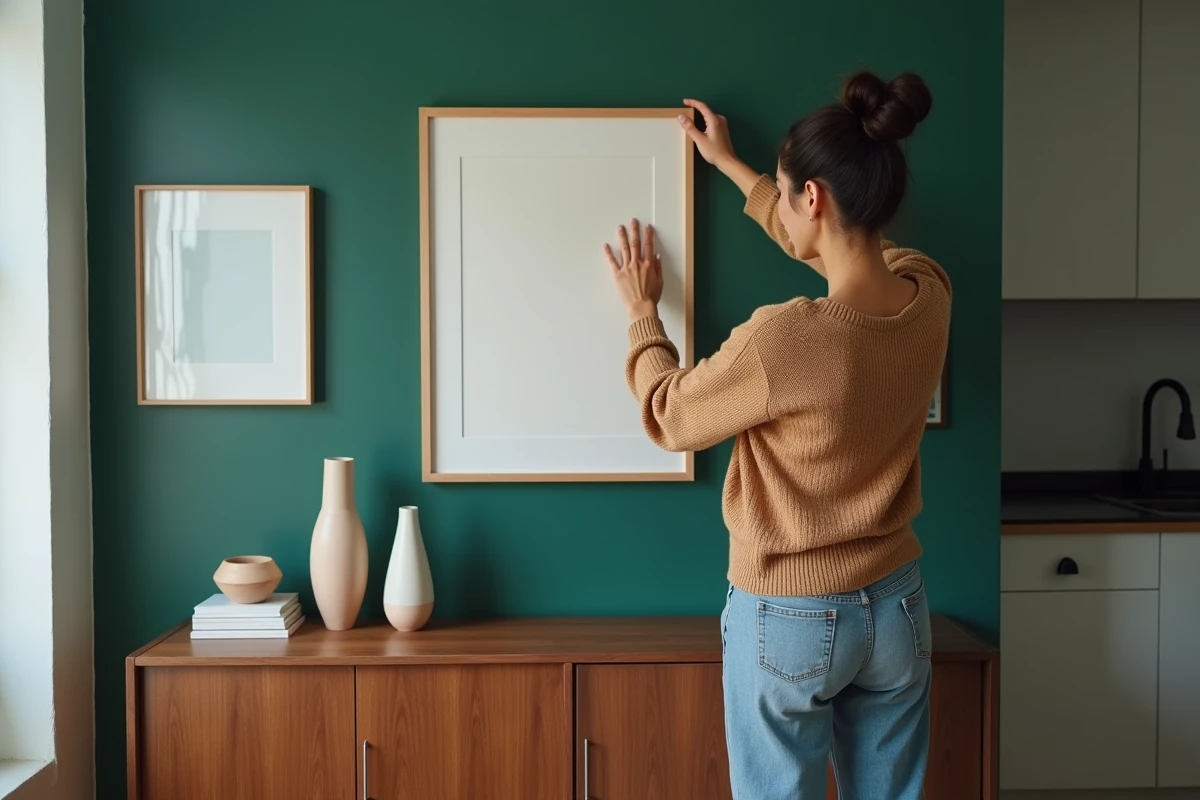
Repainting an accent wall remains the quickest lever to change the ambiance of a room. The impact of a single differently treated surface is often underestimated.
For a living room, a deep blue or olive green on the wall behind the sofa creates a depth that uniform white does not provide. In the kitchen, a terracotta or mustard yellow on the countertop wall warms the space without touching the furniture.
Combining color and material to avoid the “painted wall” effect
Layering a raw wood shelf on a colored wall breaks the flatness. It creates a play between the texture of the wood and the hue of the background, resulting in a more constructed look than a simple coat of paint.
Another option: applying geometric patterned wallpaper on a single wall, then keeping adjacent walls in a matching neutral tone. This approach works well in an entryway or narrow hallway, where the gaze is naturally channeled.
In light renovations, you can also replace kitchen cabinet handles with brushed brass or ceramic models. This detail changes the perception of the entire furniture for a minimal cost.
Micro-spaces and small areas: functional decor for a few square meters
Data from urban real estate agencies confirms that small homes account for a growing share of demand. In a studio or a one-bedroom apartment, each piece of furniture plays a dual role.
A fold-down desk mounted on the wall frees up floor space when not in use. A bench with integrated storage serves as seating, storage, and a visual separator between the sleeping area and the dining area.
The choice of colors also matters in these configurations. Light shades on the walls and ceiling visually enlarge the space, but a small area of strong color on a piece of furniture or a niche prevents the whole from appearing bland.
Mirrors and natural light in small interiors
Placing a mirror opposite a window doubles the perceived light. In a hallway of just a few square meters, a full-length mirror transforms the sense of volume without any construction work. Sheer curtains, replacing heavy drapes, allow light to pass through while filtering out views.
For a studio, it’s better to choose furniture on legs rather than blocks placed on the floor: the gaze passes under the furniture, which lightens the room.
The transformation of an interior rarely hinges on a single spectacular gesture. It’s the accumulation of coherent choices (a material, a color, a rethought layout) that ultimately creates a space where one feels different. The most effective approach is to start with the room where you spend the most time, with a limited budget and a specific goal.