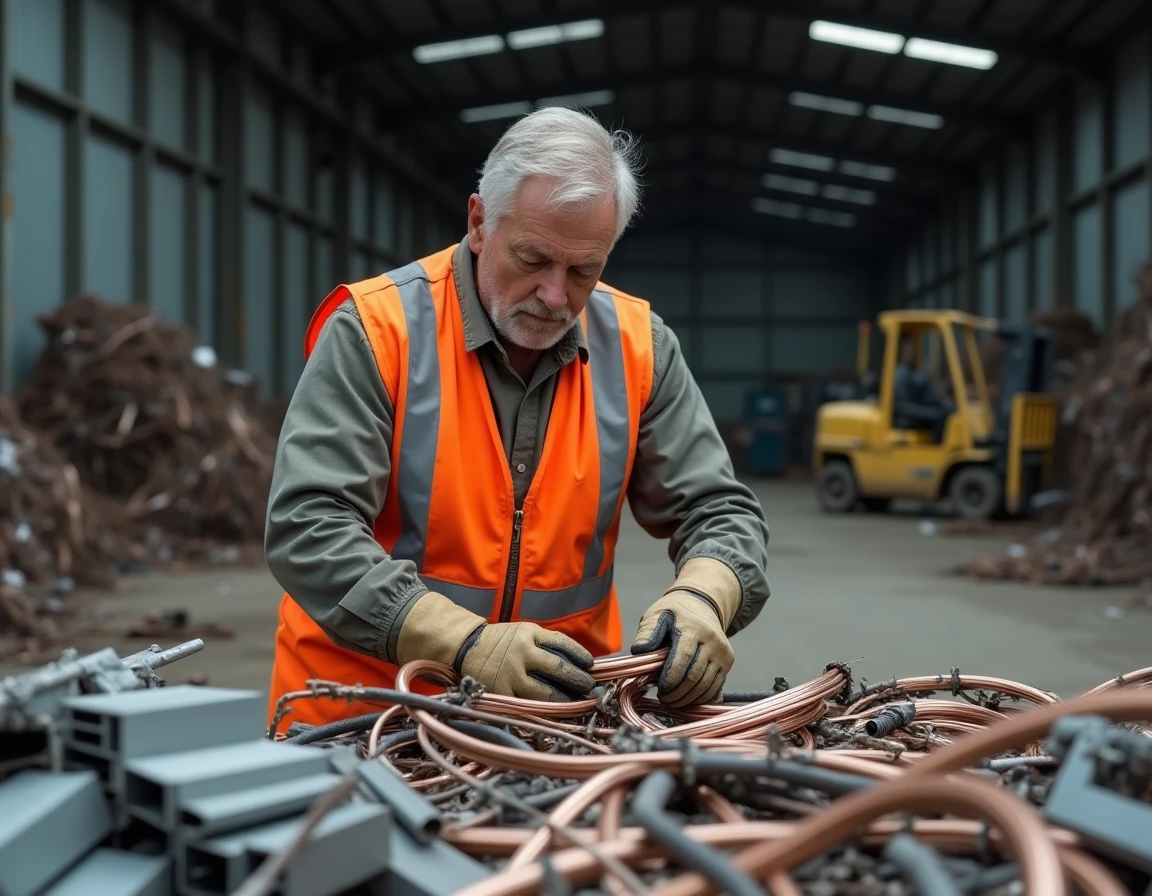
Derichebourg’s pricing grid for shredded scrap E40 shows 379 €/ton, a price directly indexed to international raw material prices. This rate serves as a reference, but it masks significant discrepancies depending on the quality of the lot, the type of metal, and the preparation done before delivery. Understanding these mechanisms allows for negotiating a buyback price significantly higher than the floor rate.
E40 Grid and Derichebourg Scrap Price Indexation
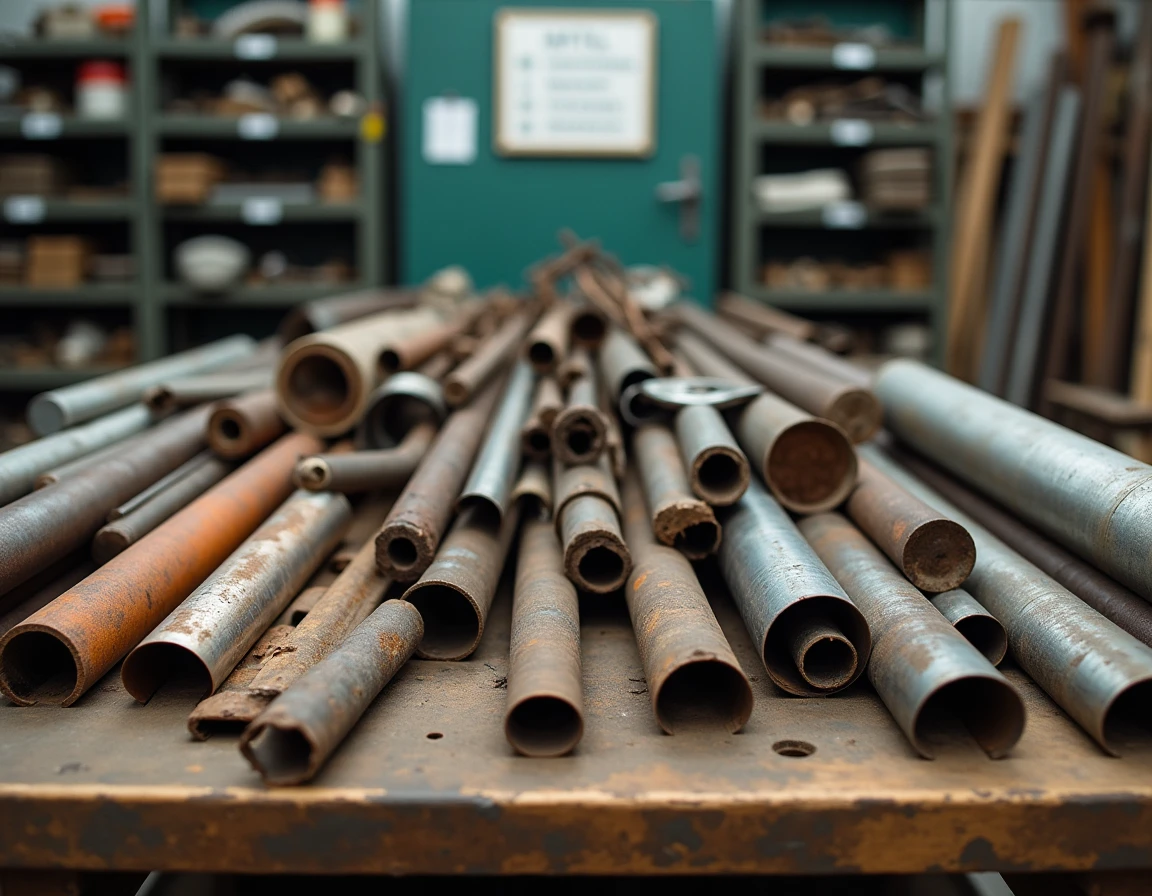
Derichebourg does not set its prices arbitrarily. Shredded scrap of category E40 serves as the benchmark used by most industrial recyclers in Europe. The E40 price follows market fluctuations in Turkey for imports and the order books of European steel mills.
When we look at the public grid, the price of 379 €/ton for E40 scrap reflects a given market state. This price changes every week, sometimes every day for large volumes. A lot of clean heavy scrap (type E3) trades better than a mix of unseparated light scrap.
We recommend checking the current scrap prices at Derichebourg before any trip, as a delay of a few days can represent a variation of several dozen euros per ton.
Cast iron, often mistakenly mixed with standard scrap, benefits from a slightly higher price at most regional scrap dealers. At players like FD Recyclage, cast iron starts around 0.20 €/kg, which gives a comparable order of magnitude to Derichebourg’s positioning in this segment.
Non-Ferrous Metals: Where the Real Margin Lies for the Seller

Copper, aluminum, and brass generate much more pronounced price discrepancies than standard scrap. For these metals, the quality of sorting directly conditions the proposed price.
Clean Milberry copper trades from 7.50 €/kg at certain regional scrap dealers. Brass hovers around 3.80 €/kg. Derichebourg applies comparable grids, adjusted according to the volumes and purity of the lot.
Aluminum illustrates the importance of classification well. The discrepancies between categories are considerable:
- AGS aluminum and almelec trade around 900 €/ton, a price reserved for clean and homogeneous lots
- Aluminum wheels reach levels close to 1,200 €/ton thanks to the purity of the alloy
- Aluminum from casings, more contaminated by oil or cast iron residues, drops to around 700 €/ton
- Ferrous almelec, mixed with magnetic elements, falls to 300 €/ton, which is three times less than pure almelec
These discrepancies show that rigorous sorting before delivery can triple the value of the same volume of aluminum. Mixing clean wheels with contaminated casings amounts to selling the entire lot at the lowest price.
Preparation of Lots: What Influences the Scrap Buyback Price
The displayed rate is never the final rate. Derichebourg, like any industrial recycler, applies discounts on poorly prepared lots. Three technical factors determine the actual price paid.
Separation of Ferrous and Non-Ferrous Metals
A magnet is enough to separate ferrous metals from non-ferrous ones. This operation, which takes a few minutes, transforms a “mixed” lot billed at the floor price into two distinct lots, each valued at its fair rate. Never deliver a ferrous/non-ferrous mix in the same bin.
Cleanliness and Absence of Contaminants
Plastics, rubbers, oils, and paints are contaminants that increase dead weight and raise processing costs for the recycler. A stripped copper lot (cables freed from their sheath) is paid significantly more than a lot of sheathed cables.
Volume and Regularity
Derichebourg favors regular and large deliveries. A craftsman or SME that delivers a constant volume every month negotiates more favorable conditions than an individual with a one-time delivery of a few dozen kilos. On-site pickups with dedicated bins are reserved for significant volumes, but they eliminate transportation costs and improve the seller’s net margin.
Immediate Payment and Buyback Conditions at Derichebourg
Immediate payment remains a strong selling point in the metal recycling sector. Derichebourg offers this option, but the terms vary by site and amounts.
For individuals, cash payments are capped by regulations. Beyond the legal threshold, bank transfers take over, with a delay of a few working days. We recommend requesting a detailed weighing slip before confirming the price, as it constitutes the only enforceable proof in case of dispute.
Professionals generally benefit from more flexible payment conditions, including monthly payments indexed to the prices on the day of delivery. This indexing protects the seller against a drop in prices between deposit and payment.
Selling Metals at the Right Time: Reading the Recycling Market
Derichebourg’s semi-annual results published at the end of May 2026 confirm an increase in the volumes of scrap processed and a rise in copper and aluminum prices. The group has raised its annual outlook based on this momentum.
This upward trend in non-ferrous metals does not mean one should store indefinitely. The prices of recycled metals follow short cycles of a few weeks, amplified by the purchasing decisions of Turkish and Asian steel mills. Waiting for a theoretical peak exposes one to the risk of a rapid reversal.
The global metal recycling market shows a structural growth trajectory, driven by industrial decarbonization policies and the scarcity of primary ores. This underlying trend supports floor prices in the medium term, reducing the risk of selling “at the worst time.”
The most reliable strategy for a regular seller remains to smooth their deliveries over several shipments rather than betting everything on a single window. A craftsman who delivers monthly mechanically captures a more stable average price than an opportunistic seller.