
A kitchen where the cabinets are still in perfect condition, but the fronts have yellowed or the style is from the 2000s: this is the most common scenario when considering a renovation. Changing the doors of your kitchen without touching the structure allows for a radical transformation of the space, for a fraction of the cost of a complete replacement.
The principle is simple, but success depends on a few technical checks that most guides forget to mention.
Check the condition of the cabinets before ordering new fronts
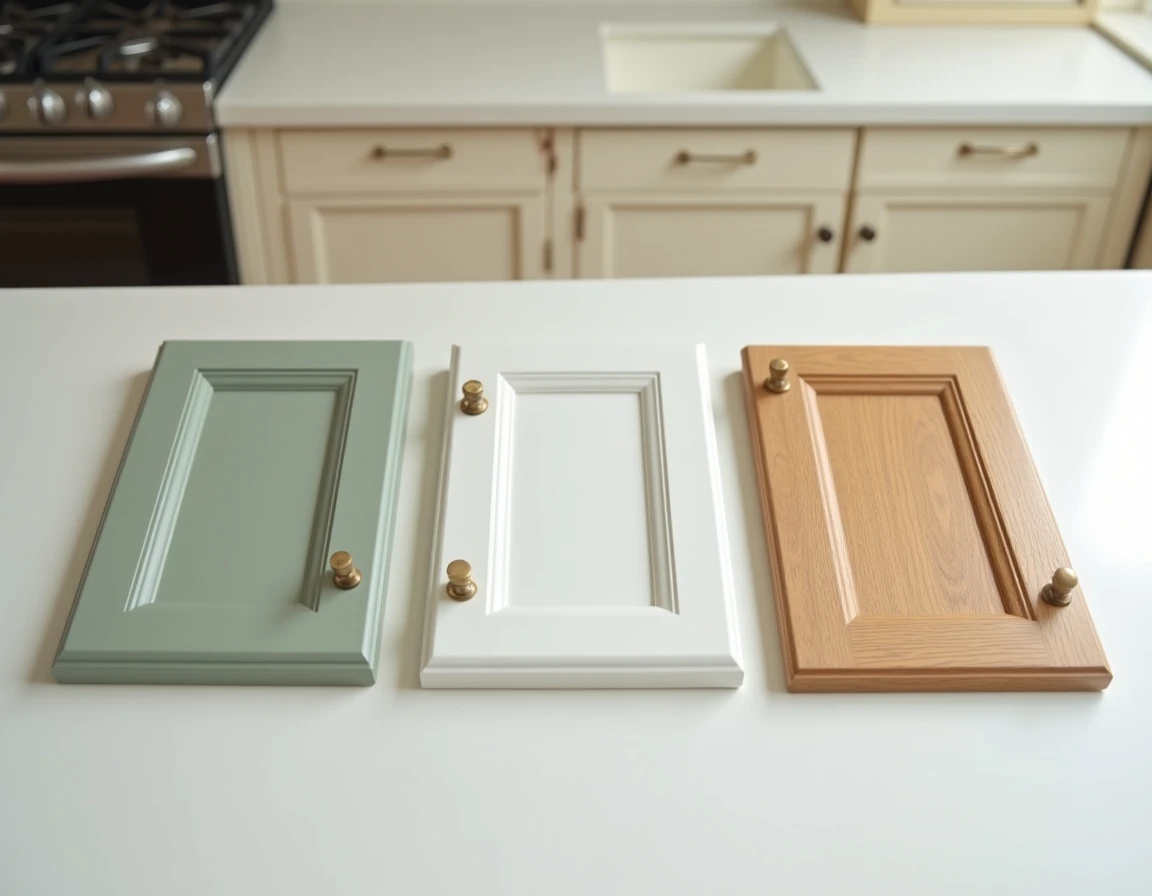
Before even browsing a catalog of fronts, start by opening each cabinet and inspecting the empty cabinets. A cabinet with a bottom that is bulging from moisture or with broken dowels will not support new doors for long. The back panel, often made of fine fibers, is the first to give way under a sink or near a dishwasher.
The hinges deserve the same attention. Recent clip-on models (type 35 mm) are easy to replace, but on older cabinets, the drilling centers may differ. If the existing holes in the cabinet are ovalized or too close together, they must be filled and redrilled before installation. Ignoring this step leads to doors that sag after a few months.
The idea of changing the doors of your kitchen is based on one assumption: the cabinets are sound. When they are, you save the majority of the budget. When they are not, it is better to replace damaged elements individually rather than installing new fronts on a fragile structure.
Custom or standard kitchen fronts: what really changes the price
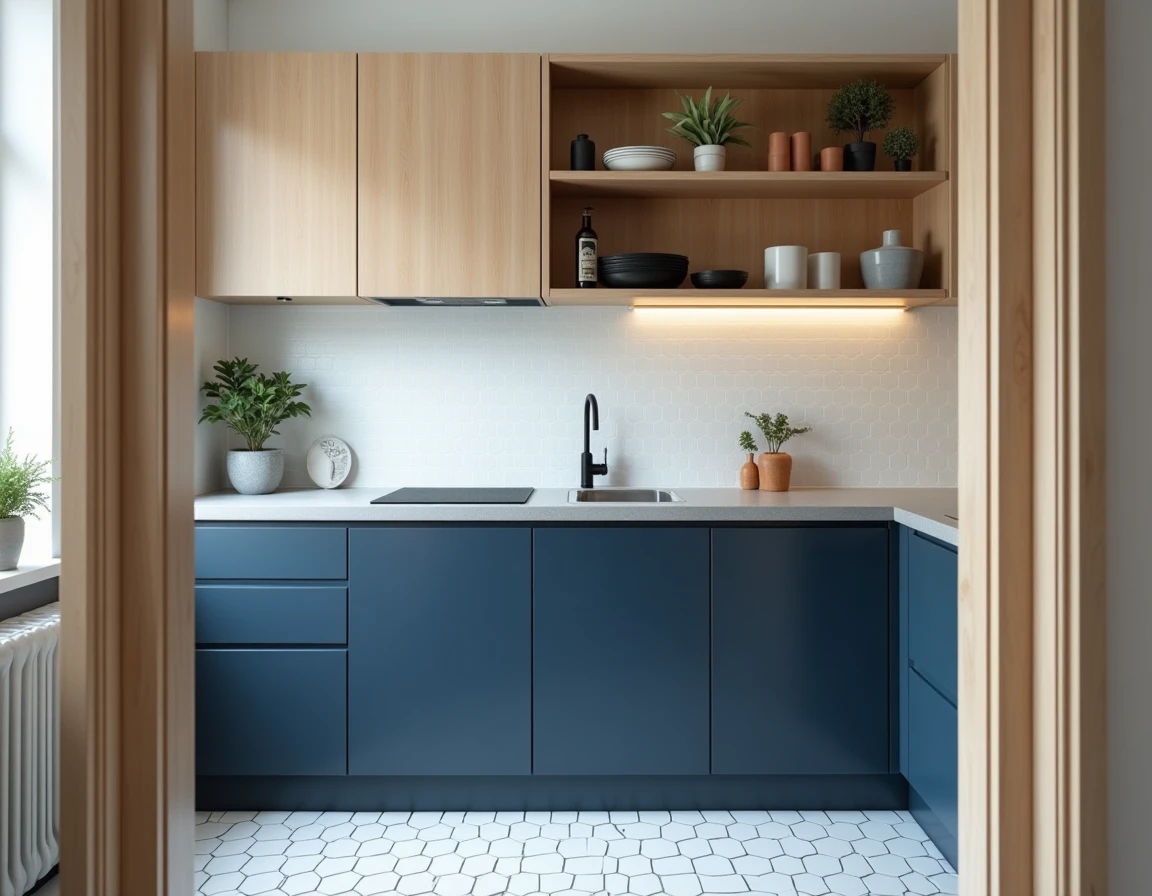
The choice between custom fronts and standard-sized fronts determines the budget more than the material itself. Standard sizes (widths of 30, 40, 45, 60 cm) are significantly cheaper because they come from common production lines. On the other hand, as soon as the kitchen has trapezoidal corner cabinets, non-standard height cabinets, or cutouts for columns, custom becomes the only reliable option.
Common materials for new doors
- Melamine remains the most economical choice. It withstands moderate humidity reasonably well, but the edges can peel over time if the quality of the veneer is low. Check the thickness of the edge (an ABS edge of at least 1 mm is preferable).
- High-pressure laminate offers better durability than melamine, with increased resistance to scratches and heat. It is the most common compromise in kitchen renovation.
- Solid wood or wood veneer provides a high-end finish but requires regular maintenance (oil or varnish) and does not handle humidity variations well near a sink without an effective hood.
- Laquered fronts, whether matte or glossy, give a very contemporary result. Their fragility to impacts and fingerprints is divisive: feedback varies on this point depending on manufacturers and finishes used.
The material is not everything. The thickness of the door directly influences the performance of the hinges: a 19 mm front does not attach with the same adjustment as a 22 mm front. Neglecting this difference causes a visible misalignment between the doors once aligned.
Handles and hinges: the details that change the style of the kitchen
The impact of handles on the final appearance is often underestimated. Replacing fronts while keeping old aged brass handles produces an inconsistent result. The choice of handles is an integral part of the project, and the handle budget often represents as much as the installation itself.
Integrated handles (also called J profiles or grooves) eliminate any protruding elements and give a very clean style. Their disadvantage: they require specific machining on the front, which complicates online orders without precise measurements.
Adjusting the hinges after installation
Each clip-on hinge allows for three adjustments: height, depth, and lateral. An adjustment of a few millimeters is enough for a door to no longer close properly or to leave an irregular gap. First, adjust the depth (so that the door is flush with the cabinet), then the height, and finally the lateral. Following this order avoids having to redo each adjustment twice.
Reconditioned fronts and refacing: two options to further reduce costs
Refacing, long confined to the North American market, has been gaining structure in France for a few years. Several brands now offer calibrated interventions with a dedicated catalog and installation in one day in some cases. The principle: keep all the furniture in place, only replace the fronts, kickboards, and visible side panels.
At the same time, circular economy platforms are starting to offer reconditioned kitchen doors. These are fronts from old showrooms or recent kitchen removals, sorted by dimensions and hinge compatibility. Prices drop significantly, but the choice remains limited in colors and finishes.
These two options also respond to a sustainability logic. Keeping the cabinets avoids producing bulky waste and reduces the amount of raw material used. Some manufacturers now offer low VOC emission fronts or certified wood, a strong argument when renovating a room where you cook every day.
Replacing kitchen doors remains one of the best visible transformation-to-euro spent ratios in a home. The key takeaway: everything hinges on preparation, between the actual condition of the cabinets, the compatibility of the hinges, and the precision of the measurements. A few millimeters error on a custom front order can be costly in terms of delays and rework.