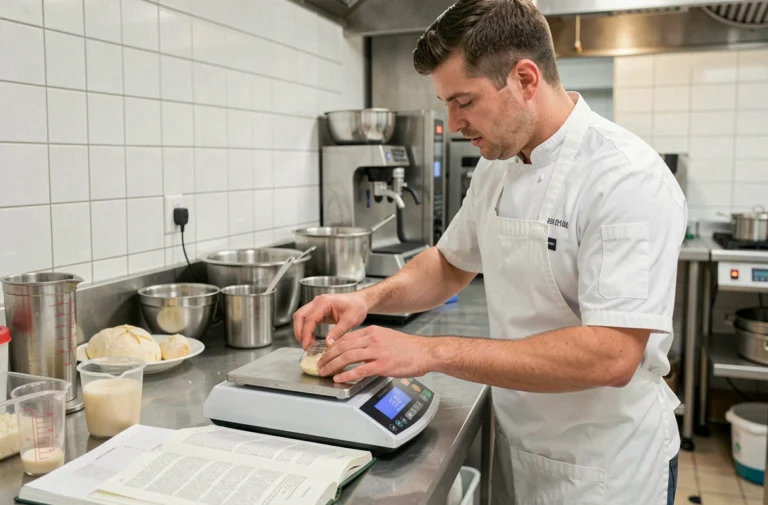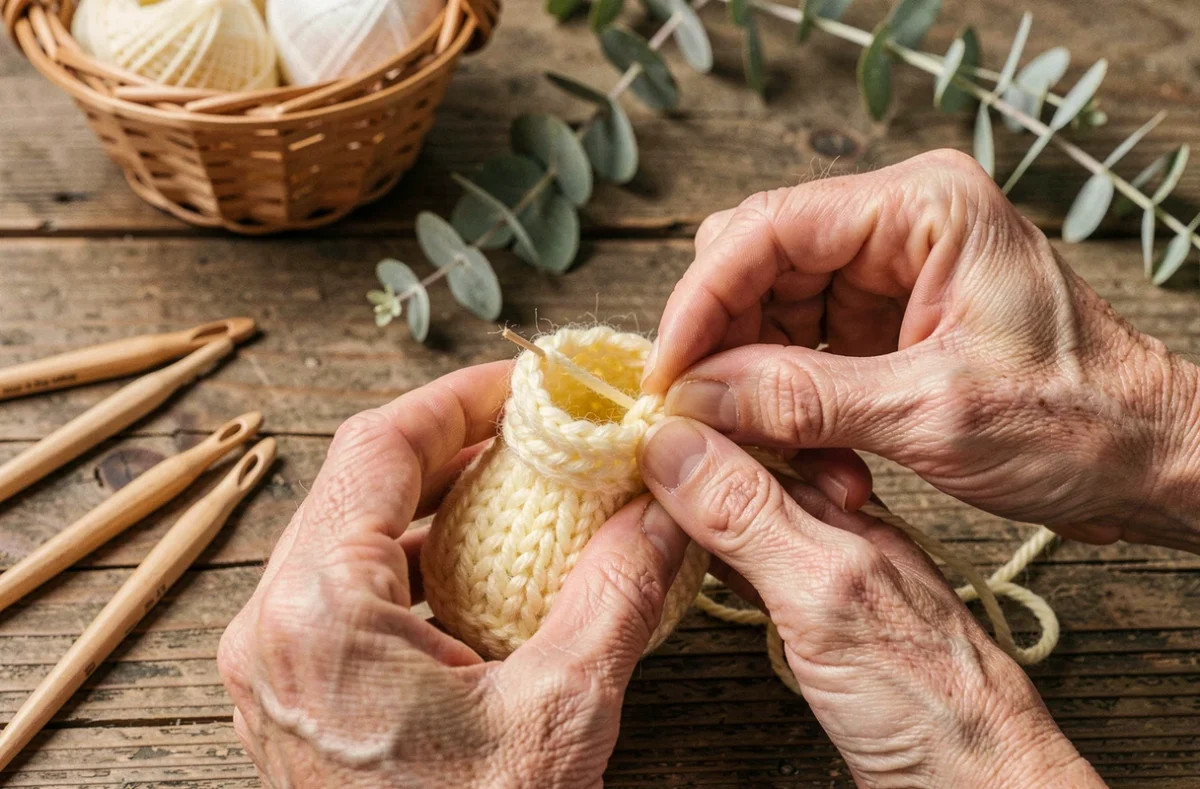
A handmade baby accessory differs from an industrially manufactured product in one specific way: each piece is cut, sewn and assembled by hand, often in limited runs. This method of production makes it possible to choose materials that touch the skin, check the strength of the seams and tailor the dimensions to a baby’s actual needs.
Since January 2025, EU member states have been required to organise the separate collection of textiles for reuse or recycling, giving a clear advantage to products designed to last beyond a baby’s first few months.
Natural materials and comfort: what makes a difference against a baby’s skin
The choice of fabric determines everything else. Unbleached organic cotton, cotton muslin and washed linen have different properties from industrially dyed polyester. The difference comes down to three factors: breathability, skin tolerance and durability after repeated washing.
Artisans who work with these materials often source them in rolls from known weavers rather than from wholesale catalogues. This allows them to check the weave density and ensure there are no residual chemical treatments. Breathable fabric reduces irritation caused by perspiration, particularly in areas prone to friction, such as the nape of the neck and the creases of the arms.
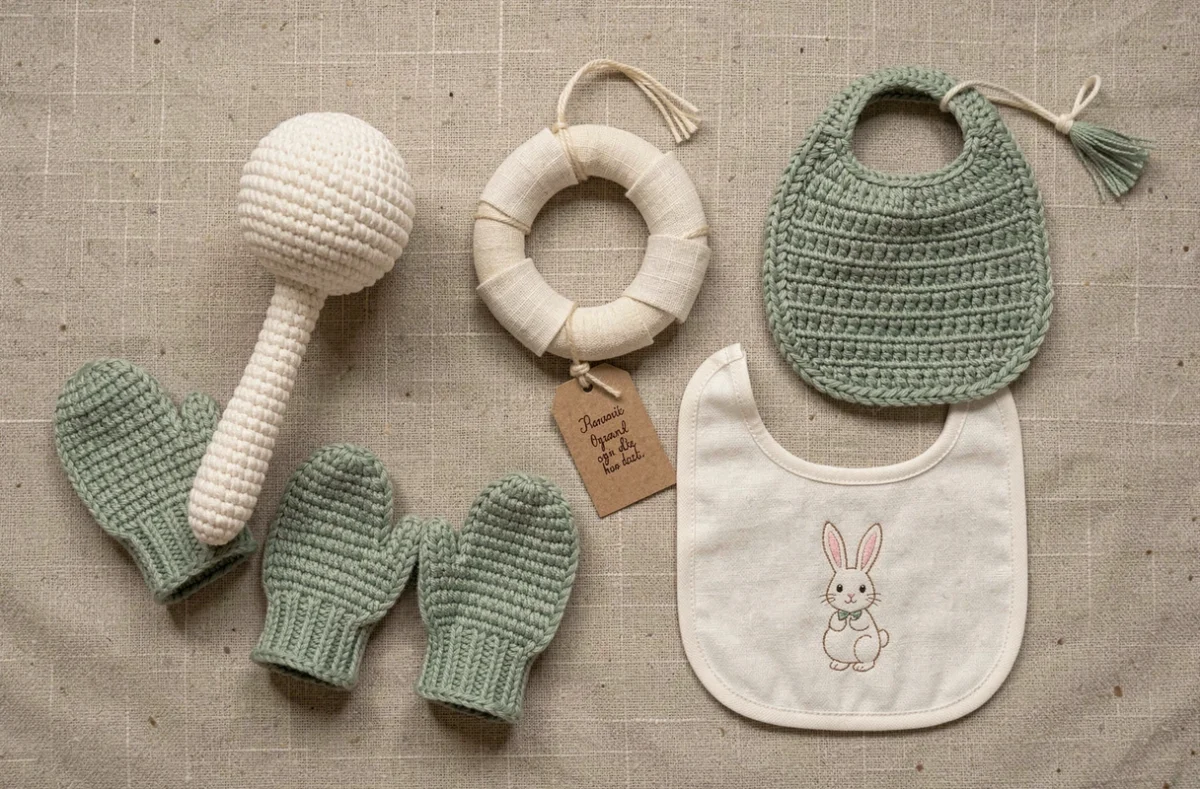
Among the most common handmade baby accessories, bibs, removable cot bumpers and swaddling blankets make direct use of these properties. A double-gauze bib absorbs better than one made from synthetic terry cloth, while also drying faster between uses.
Accessible seams and replaceable parts: designing a repairable baby accessory
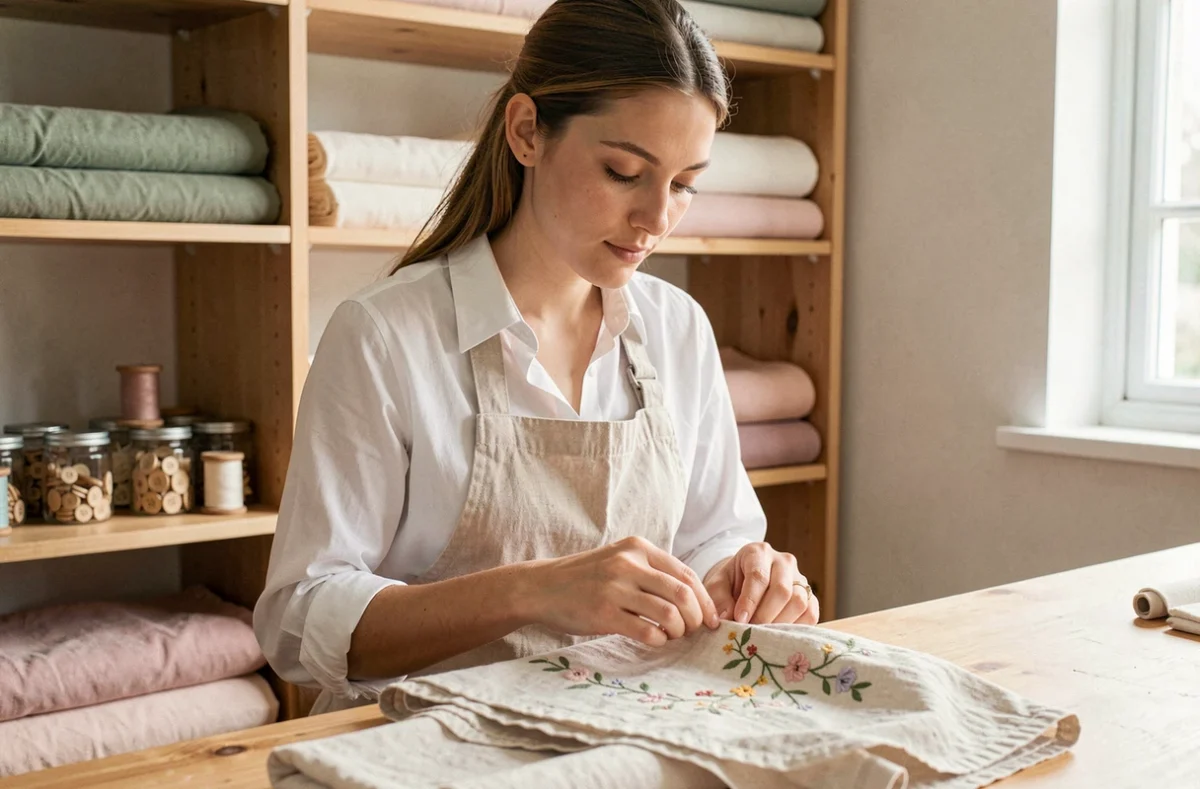
The durability of a handmade accessory depends on more than just the quality of the fabric. It also comes down to a factor that is rarely highlighted: how easy the item is to repair after use. A pushchair cushion with a cover that detaches using snap fasteners can be washed and resewn with ease. A model with padding heat-sealed to the outer fabric becomes waste as soon as a seam gives way.
This design principle, which artisans naturally apply by making every seam accessible, takes on particular importance in the context of extended producer responsibility for textiles, which is being strengthened across Europe. Small artisan brands selling in the EU are directly affected by these regulatory changes.
Technical details that make an accessory easy to pass on
An item designed to be passed from one child to another incorporates specific design choices:
- Snap fasteners or ties instead of Velcro, which collects dirt and loses its grip after a few dozen washes
- Elastic threaded through open casings, so it can be replaced without unpicking the entire piece
- Neutral or timeless patterns and colours that won’t make the item look dated after one season
- Labels listing the materials and care instructions, so the next user knows how to wash the item
A repairable accessory is easier to pass on than a single-use item. As a child grows, a swaddling blanket can become a pushchair blanket, then a play mat. This versatility is only possible if the item can withstand hundreds of wash cycles.
Handmade and textile safety: the standards that apply to artisan creations
Handmade products are not exempt from regulatory requirements. The EU General Product Safety Regulation (GPSR) applies to anyone placing an item on the market, including makers selling through online platforms or at local markets.
In practical terms, this means being able to document the traceability of the materials used and ensuring there are no small detachable parts that could pose a choking hazard. Decorative cords and ribbons must comply with maximum length limits to prevent any risk of strangulation—a requirement covered by strict European standards for products intended for children under 36 months.
For an artisan, this means adapting the design from the pattern stage: no decorative button sewn onto the surface of a bib, and no unsecured pom-pom on a hat. Decorative elements are embroidered or attached with reinforced stitching rather than glued on.
Recycling and reusing baby textiles: an issue that goes beyond handmade products
Baby accessories have a short useful life, often just a few months. This raises the question of what happens to them at the end of their life. Textile waste remains a major issue across the EU, and mandatory separate collection introduced in 2025 is specifically intended to divert these items from landfill.
A handmade item made from a single natural fibre (pure cotton or pure linen) is easier to recycle than one made from synthetic blends. Textile recycling facilities struggle to process fabrics that combine polyester and cotton because separating the fibres is costly and energy-intensive.
Extending useful life instead of recycling
Reuse is preferable to recycling. A cot bumper in good condition can be resold, given away or dropped off at a textile collection point. For this to work, the item must retain its properties after use.
- Fabric with a sufficiently high weight is more resistant to pilling and retains its appearance after many washes
- Dye made with certified colourants does not run or fade to the point that the item becomes unsellable second-hand
- Natural-fibre filling (kapok or wool) compresses less quickly than low-quality synthetic stuffing
How easy an item is to pass on matters just as much as the choice of fabric when it comes to the true durability of a handmade baby accessory. An item designed to be taken apart, washed and reassembled can be passed down through several siblings without losing its function.
Craftsmanship in baby accessories is about more than a polished look or a “handmade” label. What makes these pieces truly durable is their ability to be cared for, repaired and passed on—three qualities that only thoughtful design from the pattern stage can guarantee.