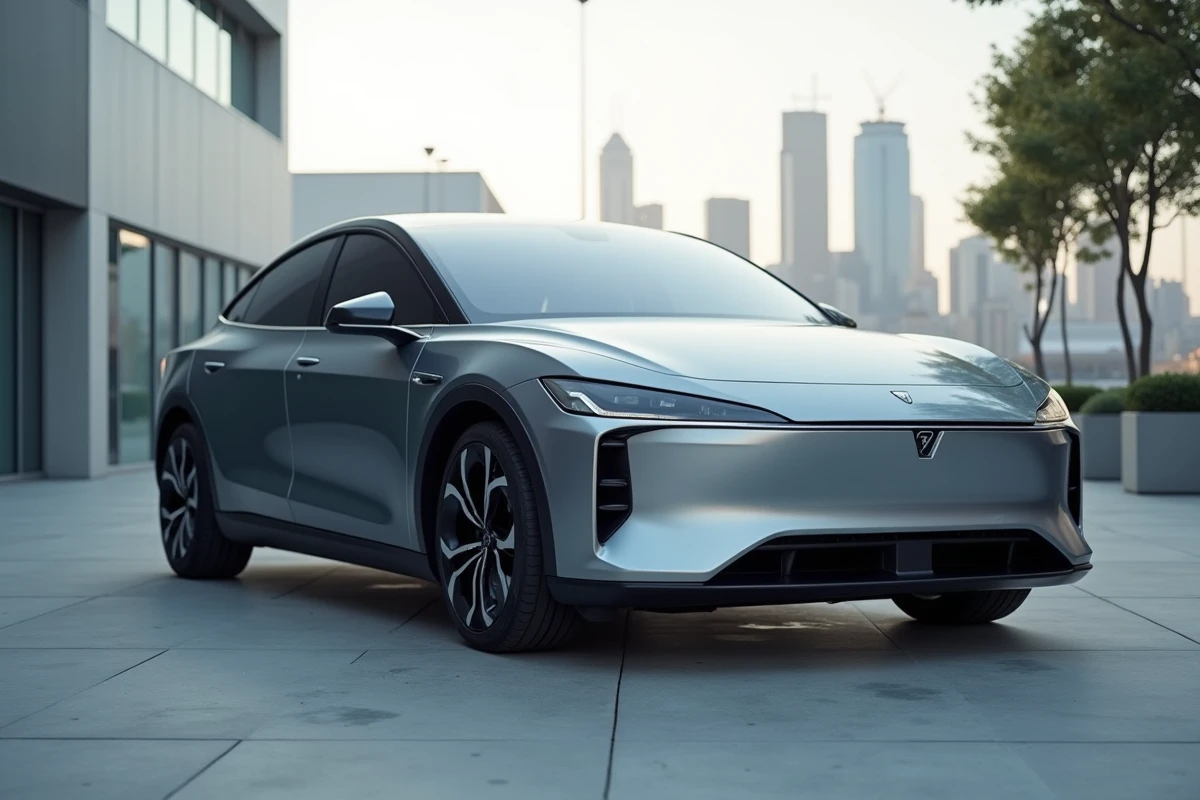
A driver looking for an affordable electric city car in France today encounters brands they didn’t know two years ago. BYD, Leapmotor: these names are now displayed in dealerships alongside Peugeot and Renault. The automotive world is moving quickly, and the usual benchmarks (engine type, budget, after-sales network) are shifting with it.
Keeping up with the latest in the automotive sector is no longer just a curiosity, but a practical reflex before any vehicle purchase or renewal.
Chinese manufacturers in France: dealerships, not promises
For years, there has been talk of the “Chinese threat” to the European car market. The difference in 2025 is that these manufacturers are no longer content to showcase prototypes at trade shows. BYD opened its first “BYD House” in Paris in December 2024 and is structuring a network of dealerships with the Emil Frey France group.
Stellantis has taken another step forward by finalizing, as early as October 2024, an industrial agreement with Leapmotor to distribute its Chinese electric models through the group’s existing European network. You can check the automotive news on Tous les Faits to follow the concrete evolution of these establishments, which are changing the competition in the accessible electric car segment.
The result for buyers: more models available, lower prices in the SUV and electric city car segments, and increased pressure on legacy manufacturers to adjust their pricing.
Hybrids and electric vehicles: the return of pragmatism in the French market
For two or three years, the dominant discourse pushed towards full electric. In reality, the situation is more nuanced. In France, the ecological bonus was removed for most plug-in hybrids starting in 2023. As a result, buyers who drive a lot or do not have a charging station at home found themselves stuck between a petrol vehicle on borrowed time and an electric one that is still expensive.
The government reopened discussions in 2025 on targeted support for hybrids for professionals and high-mileage drivers, as part of the preparatory work for the future Energy-Climate Programming Law. The ACEA also notes that registrations of hybrid vehicles (full hybrid and PHEV) are increasing across Europe.
For a hesitant driver, the framework remains the same:
- A short daily commute (less than 50 km) and accessible charging make electric vehicles relevant, especially with the gradual decrease in battery prices.
- A mixed use (city and regular long trips) leans more towards a full hybrid or a PHEV, provided that specific maintenance costs are checked.
- A high-mileage professional without charging infrastructure should keep an eye on potential aids that could return for plug-in hybrids.
Feedback varies on this point depending on regions and profiles, but the general trend is towards rebalancing: electric does not replace petrol everywhere, and hybrids are regaining a legitimate place in manufacturers’ offerings.
Euro 7 standards and penalties: what changes concretely for vehicle purchases
The Euro 7 standards, repeatedly delayed, continue to impact manufacturers’ decisions. Some petrol models see their lifecycle extended in Europe because adapting them would be too costly compared to the expected sales volumes. Others simply disappear from the catalog.
On the penalty side, the gradual tightening of the scale pushes buyers of SUVs and powerful sedans to recalculate their budgets. The total cost of ownership becomes the real criterion for choice, not just the list price. Now, the penalty at purchase, the cost of energy (electricity or fuel), depreciation, and maintenance costs related to the engine type are all factored in.
Used vehicles: a market under pressure
The cascading effect of regulations is also felt in the used car market. Recent petrol models that comply with current standards maintain a strong value. Used electric vehicles are starting to arrive in volume, but the question of battery warranty still deters some buyers.
Before signing, three things should be checked: the battery health certificate (or “State of Health”), the history of fast charging (which can accelerate wear), and the remaining warranty coverage from the manufacturer.

New models and trends expected in the French market
Each segment (sports car, SUV, compact) now has at least one electrified option. The question is no longer “is there an electric alternative?” but “which one fits my usage?”.
Connectivity and embedded artificial intelligence
New models increasingly integrate functions powered by artificial intelligence: predictive parking assistance, automatic adjustment of comfort settings, and remote software updates. The car is becoming a connected object with software update cycles, raising questions about the manufacturer’s support duration, just like with a smartphone.
Before purchasing a connected vehicle, one should ensure the manufacturer’s update policy and the long-term compatibility of embedded services. A model abandoned on the software side loses part of its value long before it is mechanically worn out.
The French automotive market is going through a phase where choices are multiplying without the traditional benchmarks disappearing. Engine type, budget, maintenance network, resale value: these criteria remain valid, but they now apply to a broader range of technologies. Keeping an eye on regulatory developments and the arrival of new players helps avoid a poorly calibrated purchase, whether aiming for new or used.