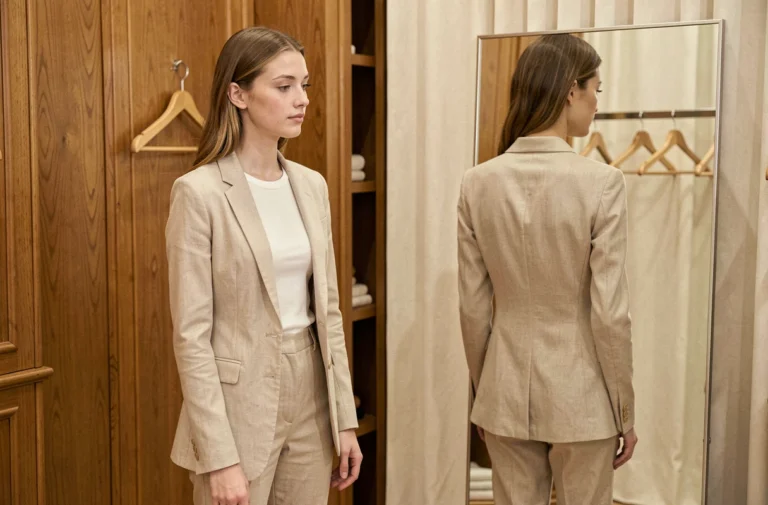
Choosing your size at Zara for women remains a recurring source of frustration, even for regular shoppers of the brand. The cuts vary from one collection to another, the correspondences with other brands are unreliable, and body shapes themselves fluctuate with the seasons. This guide provides concrete benchmarks to limit mistakes, both online and in-store.
Zara women’s size comparison with H&M and Mango
The first difficulty arises from the fact that sizes are not standardized among fast fashion brands. A size 38 at Zara does not correspond to the same size 38 at H&M or Mango, especially for curvier body types. According to comparative fittings reported by fashion creators, Zara women’s sizes run half to a full size smaller than H&M on the hips and bust.
| Label Size | Zara Women (indicative bust measurement) | H&M (indicative bust measurement) | General Trend |
|---|---|---|---|
| S / 36 | Tighter fit | Looser fit | Zara runs smaller |
| M / 38 | Body-hugging cut | Standard cut | Marked difference on the hips |
| L / 40 | Fitted at the bust | More spacious | Zara remains tighter |
This table reflects a trend observed in recent collections, not an absolute rule. Zara offers several lines (Woman, TRF, SRPLS) whose cuts differ. TRF, aimed at a younger audience, generally runs smaller than the Woman line.
To refine your reference before making a purchase, consulting a detailed Zara women’s size guide by clothing category can save time and avoid back-and-forth trips to the store.
Seasonal variations in body shape and Zara size: what changes concretely
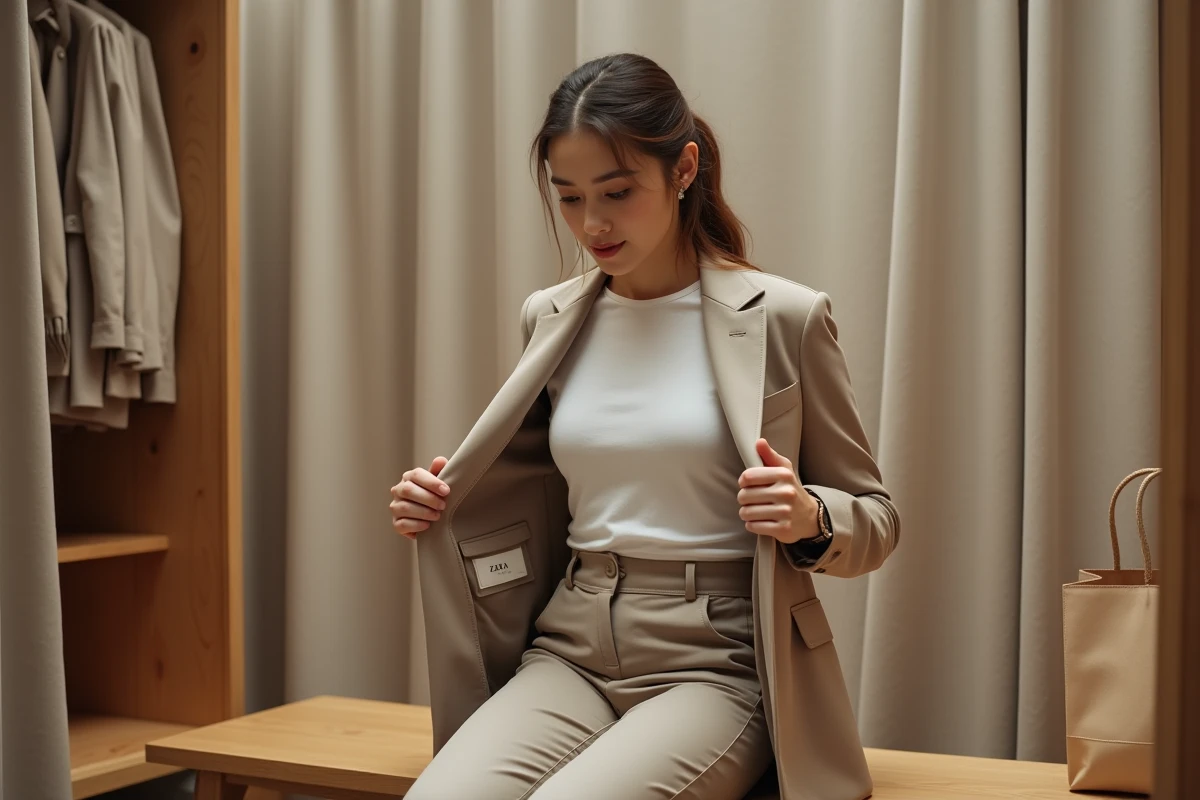
Adapting size choices to the seasons is not trivial. The body does not present the same volumes in January as it does in July. Water retention due to heat, hormonal variations, and the transition from layered clothing to fitted pieces alter how a garment falls.
In summer, the hip and bust measurements can significantly increase for many women, without any actual weight gain. At Zara, where the cuts already lean towards slim, this difference is enough to transform a comfortable size 38 into a size 38 that is too tight at the bust or waist.
Two practical reflexes can limit unpleasant surprises:
- Take your measurements at the time of purchase, not relying on those taken six months earlier. A measuring tape around the bust, waist, and hips takes less than a minute.
- Opt for the larger size for structured pieces (blazers, low-rise jeans, fitted dresses) purchased between May and September, when the body retains more water.
- Stick to your usual size for fluid pieces (oversized shirts, flared dresses) whose cut can accommodate these variations.
This seasonal logic particularly applies to Zara women’s jeans, which use less stretchy denim on certain styles. A pair of jeans bought in winter can become uncomfortable as early as spring without the label size changing.
Zara’s MySize tool: reliability and limitations in finding your size
Zara has updated its MySize tool, accessible from the product page on the app and website. This tool asks for some information (height, weight, body shape, fit preferences) and suggests a size for each item. An AI-based recommendation feature was integrated in beta version at the end of 2025, with body scans via the mobile app.
According to Inditex’s November 2025 press release, this technology reduces size errors by about 30% on average compared to choosing without assistance. The EU regulation EU 2024/1234 on product information is pushing brands to standardize their online size guides, and Zara is among the first brands to comply.

However, the tool remains imperfect in two areas. It does not account for the seasonal variations in body shape mentioned earlier. And its recommendations are based on statistical averages: for body shapes that deviate significantly from the standard (broad shoulders and a narrow waist, for example), the suggestion may be inappropriate.
The most reliable reflex is to cross-reference the MySize recommendation with your own measurements taken on the day of purchase and to check the fabric composition. A garment containing elastane will be more forgiving than one made of 100% cotton or rigid denim.
Measurements to take and common mistakes at Zara for women
The majority of size errors come from poorly taken or never updated measurements. Three measurements are sufficient to cover almost all Zara women’s clothing:
- Bust measurement: measured at the fullest point, without compression, wearing a regular bra.
- Waist measurement: at the natural waist indentation, not at the level of the pants waistband.
- Hip measurement: at the widest point of the hips, with feet together.
The most common mistake is measuring the waist too low, at the level of the navel, which distorts the fit for high-waisted pants and skirts. Another trap: relying on the size worn at another brand. Zara women’s collections, especially since 2024, have adopted slimmer cuts that do not allow for this shortcut.
The recent trend towards more fitted cuts has also led to a notable increase in returns for poorly fitting sizes, mentioned in Inditex’s 2025 annual report. The issue is not that Zara sizes “wrong,” but that the slim cut amplifies every measurement discrepancy, even minimal.
One last often-overlooked point: the length of legs and sleeves does not always appear in online size guides. For pants and coats, checking the detailed dimensions on the product page (when available) or trying them on in-store remains the safest method.